Greece sees lower heart attack numbers as pollution goes down
In western Macedonia, a decrease in air pollution has been observed along with a reduction in hospitalizations for heart-related illnesses.
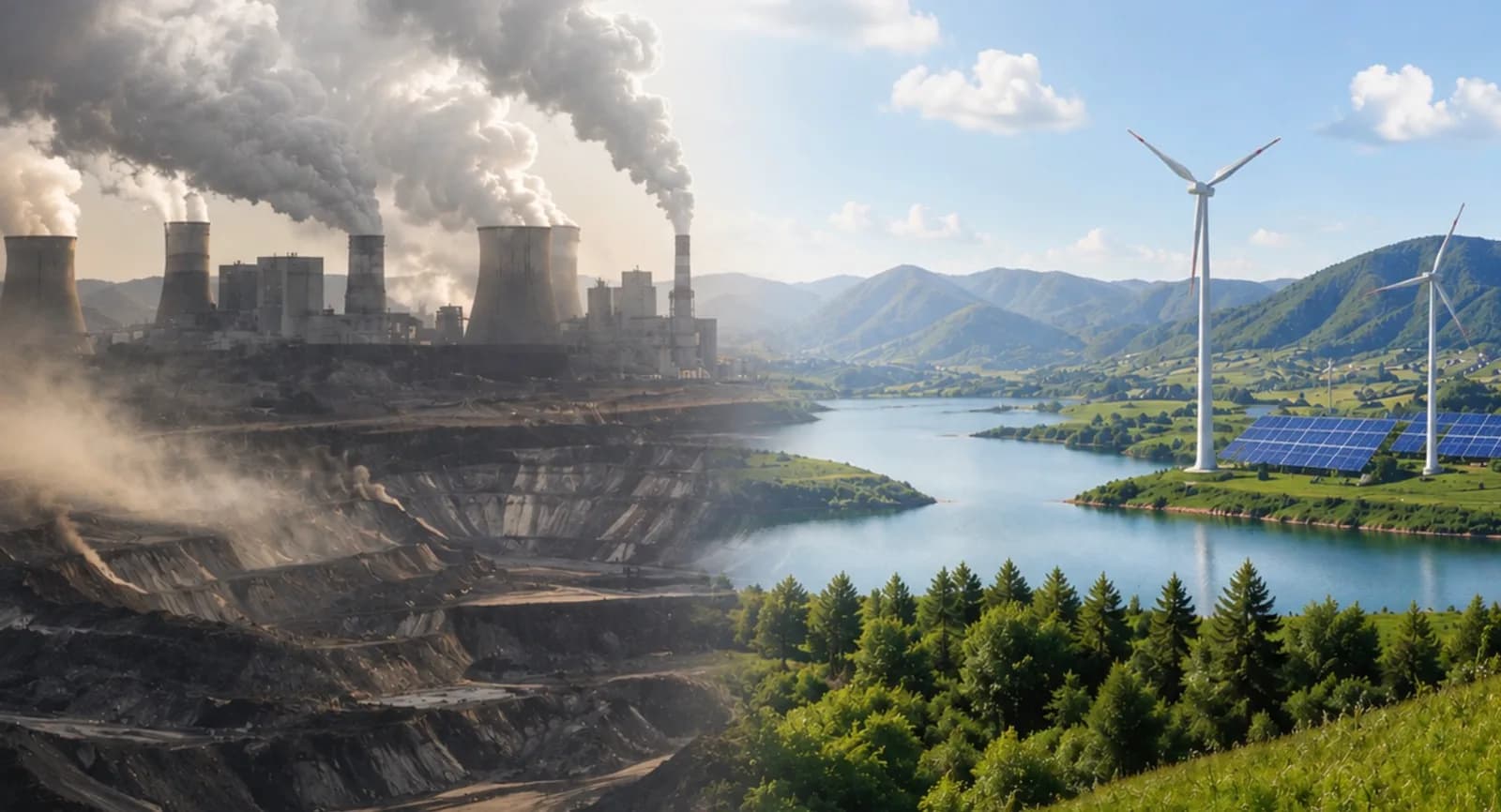
A new study conducted in Western Macedonia, a lignite basin in Greece, reveals that the decline in air pollution following the decommissioning of coal-fired power plants coincided with a decrease in cardiac-related hospitalizations in the region. The research, published in the International Journal of Environmental Research and Public Health in January 2026, measured a significant decrease in levels of particulate matter 10 (PM10), sulfur dioxide (SO2), and nitrous oxide (NOx) when comparing the period 2011-2014 with 2021.
The study's data was compiled from the records of four regional hospitals in Kozani, Ptolemaida, Florina, and Grevena. According to the article, authored by researchers from the University of Western Macedonia, Aristotle University Faculty of Medicine, and Ptolemaida State Hospital, the decrease in pollution was accompanied by a significant reduction in hospitalizations due to acute coronary syndrome and atrial fibrillation in Ptolemaida and Florina, areas with high exposure due to their proximity to the power plants.
The authors adopt cautious language in presenting their findings: the relationship between monthly pollutant concentrations and cardiovascular hospitalizations is described as "modest but statistically significant," and the results are presented as a correlation rather than a direct causal relationship. The weight of this result, derived from a single study and lacking independent validation, must be understood within this balanced framework.
"Natural laboratory" region
The health burden of coal has long been estimated primarily through simulation and modeling studies. In recent years, a new layer has emerged in the literature: concrete health data measured on-site after power plant closures. Greece is one of the few countries that has made this measurement possible: according to data from the International Energy Agency (IEA), lignite's share of the country's electricity production fell from 60 percent in 2005 to 10 percent in 2021. The National Climate Law, adopted in May 2022, envisages a 55% reduction in greenhouse gas emissions by 2030, net zero emissions by 2050, and the complete phasing out of electricity generation from lignite by 2028.
A separate study published in the journal Atmosphere measured a general decrease in PM2.5 and PM10 concentrations in the same region between 2010 and 2021, identifying lignite mining, lignite power plants, and biomass burning for heating as the main sources of pollution.
On the other hand, there is the socio-economic structure of the region. According to a compilation by Agence France-Presse (AFP), unemployment in Western Macedonia has reached double the national average of 8.1%; the region has lost a tenth of its population in the last decade, and trade unions speak of more than 10,000 job losses. The local debate in the region is therefore stuck between the dilemma of "clean air or employment."
This article was produced with the assistance of AI tools and reviewed by an editor before publication.