Rooftop rainwater tanks paired with smart sprinklers could cool down heat-stressed cities
A University of Manchester study modeling Tokyo found that rooftop rainwater collection combined with automated sprinklers could lower street-level temperatures during heat waves while also easing flooding.
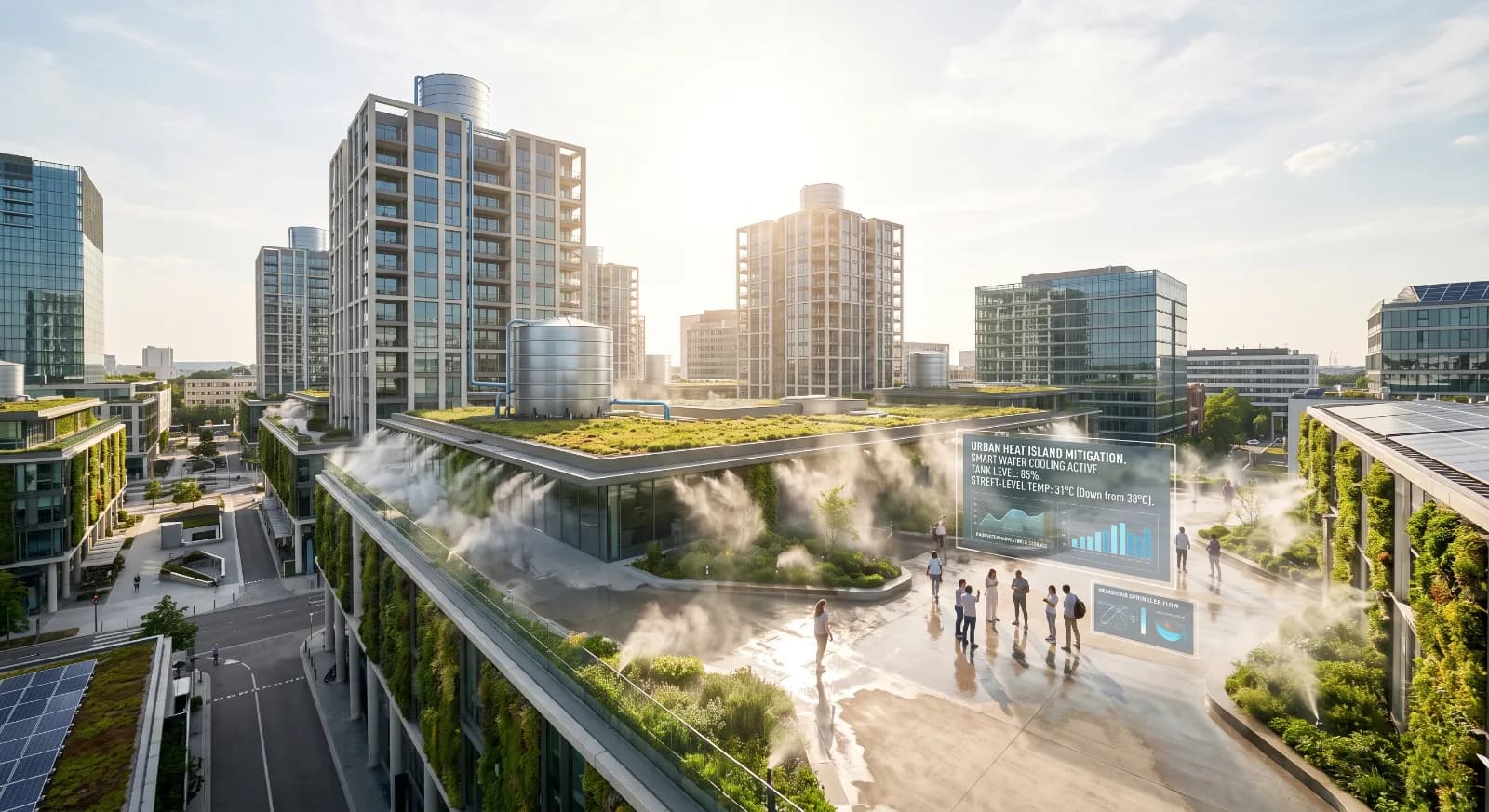
According to a piece published Friday by Nick Ruggia on Mongabay, researchers at the University of Manchester led by Zhonghua Zheng built a computer model showing that rooftop rainwater tanks paired with smart sprinkler systems could meaningfully cool cities during heat waves. Using Tokyo as a case study, the model found the system lowered surface temperatures, air temperatures, and humidity by triggering sprinklers to release stored rainwater at set temperature thresholds, cooling the air through evaporation.
The study found that larger rainwater tanks stored more water for cooling, though increasing sprinkler intensity delivered diminishing returns beyond a fairly low threshold, and getting the triggering temperature right was critical to the system's effectiveness. Researchers said the approach could also reduce electricity demand for air conditioning, lowering associated greenhouse gas emissions, and help capture rainfall runoff to ease urban flooding.
The researchers noted the model can be adapted to different climate zones, though it may be less effective in tropical regions with already-high humidity, and they recommended field testing before wider rollout. They highlighted that the approach could be especially valuable for lower-income residents who lack access to air conditioning during extreme heat.
Nick Ruggia, Mongabay: https://news.mongabay.com/2026/09/rooftop-rainwater-sprinkler-systems-could-help-cool-warming-cities-study-says/
This article was produced with the assistance of AI tools and reviewed by an editor before publication.