Study: delaying net zero locks in more extreme El Niño years for centuries
A warmer deep ocean keeps the Pacific primed for extreme events long after emissions stop, and Southeast Asia's fire and haze risk is set to outlast the energy transition.
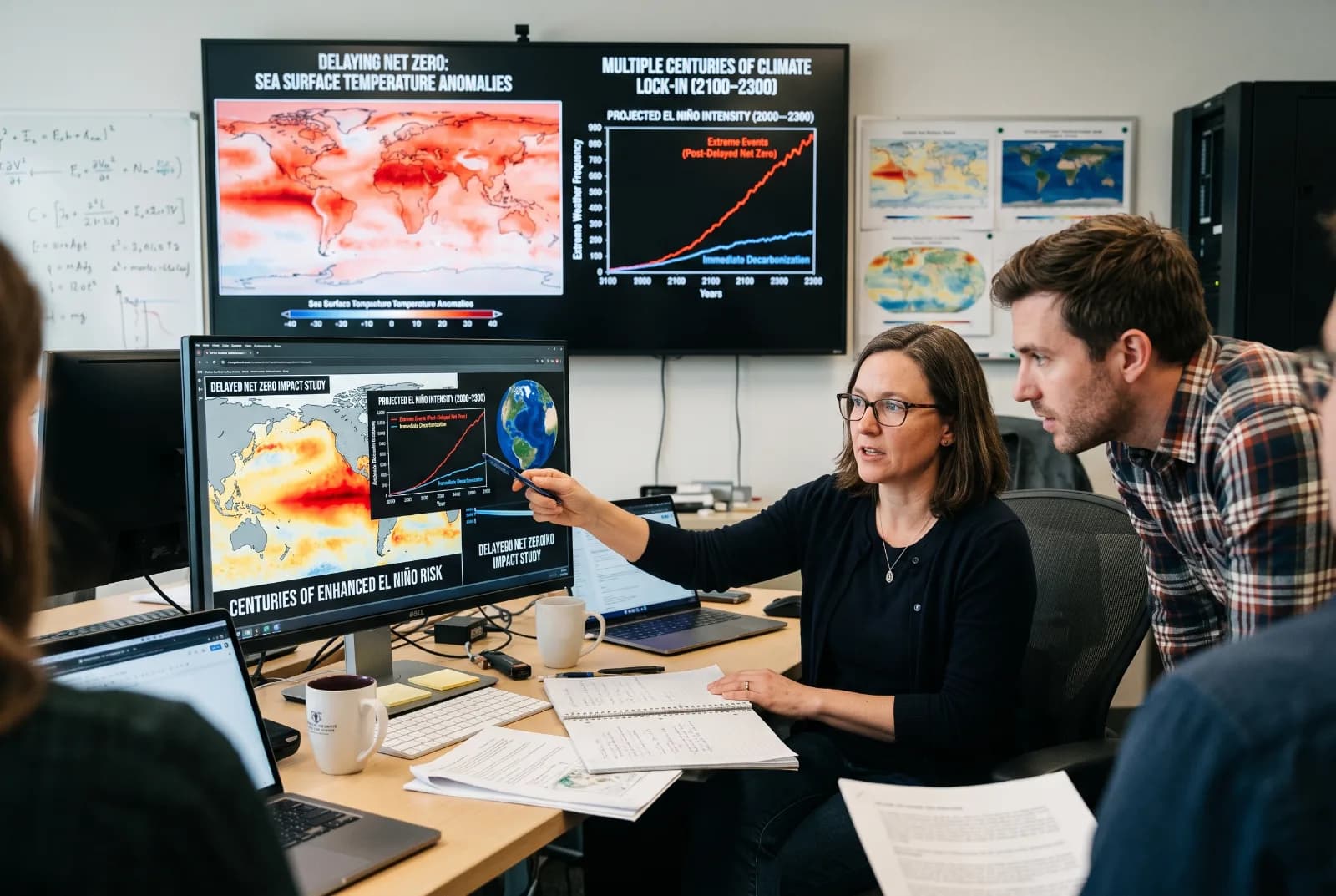
Extreme El Niño events will remain far more common for centuries after the world reaches net zero, and the later emissions stop, the more frequent they become, according to a study published Oct. 13 in the journal Communications Earth & Environment.
The finding matters most for Southeast Asia, where El Niño brings dry weather that spreads fires and haze, cuts rice and palm oil harvests and pushes up palm oil prices. The study suggests that risk will outlast the shift away from fossil fuels and grow the longer that shift takes.
In the study's main climate model, extreme events made up 1.73% of El Niño events before industrialization. If emissions stopped in 2030, that share rose to 16.4%, nearly 10 times as high. If they stopped in 2060, it reached 26.3%, about 15 times as high.
Researchers at the University of Melbourne and the Australian Research Council (ARC) Centre of Excellence for the Weather of the 21st Century traced the effect to the Southern Ocean and the deep ocean, which keep warming long after emissions end. That weakens the trade winds and keeps the eastern Pacific warm.
"The atmosphere and the ocean surface can adjust relatively quickly, while the deep ocean absorbs and releases heat over hundreds or even thousands of years. This gives the ocean a long memory of previous greenhouse-gas emissions," lead author Aditya Sengupta said in a statement.
Indonesia's fires during the 2015 El Niño burned 2.6 million hectares and cost the country at least $16.1 billion, according to the Center for International Forestry Research (CIFOR).
This brief is based on an article published Oct. 15, 2026, by Kelvin Yap in Eco-Business. Read the original: https://www.eco-business.com/news/later-net-zero-means-more-extreme-el-nino-years-for-centuries-study-finds/
This article was produced with the assistance of AI tools and reviewed by an editor before publication.