Mismatched licensing rules threaten Singapore's cross-border clean power ambitions
A new industry report finds that short electricity export licenses in Indonesia and Malaysia clash with the decades-long financing that cross-border clean power projects need, complicating Singapore's push to import 6 gigawatts of clean electricity by 2035.
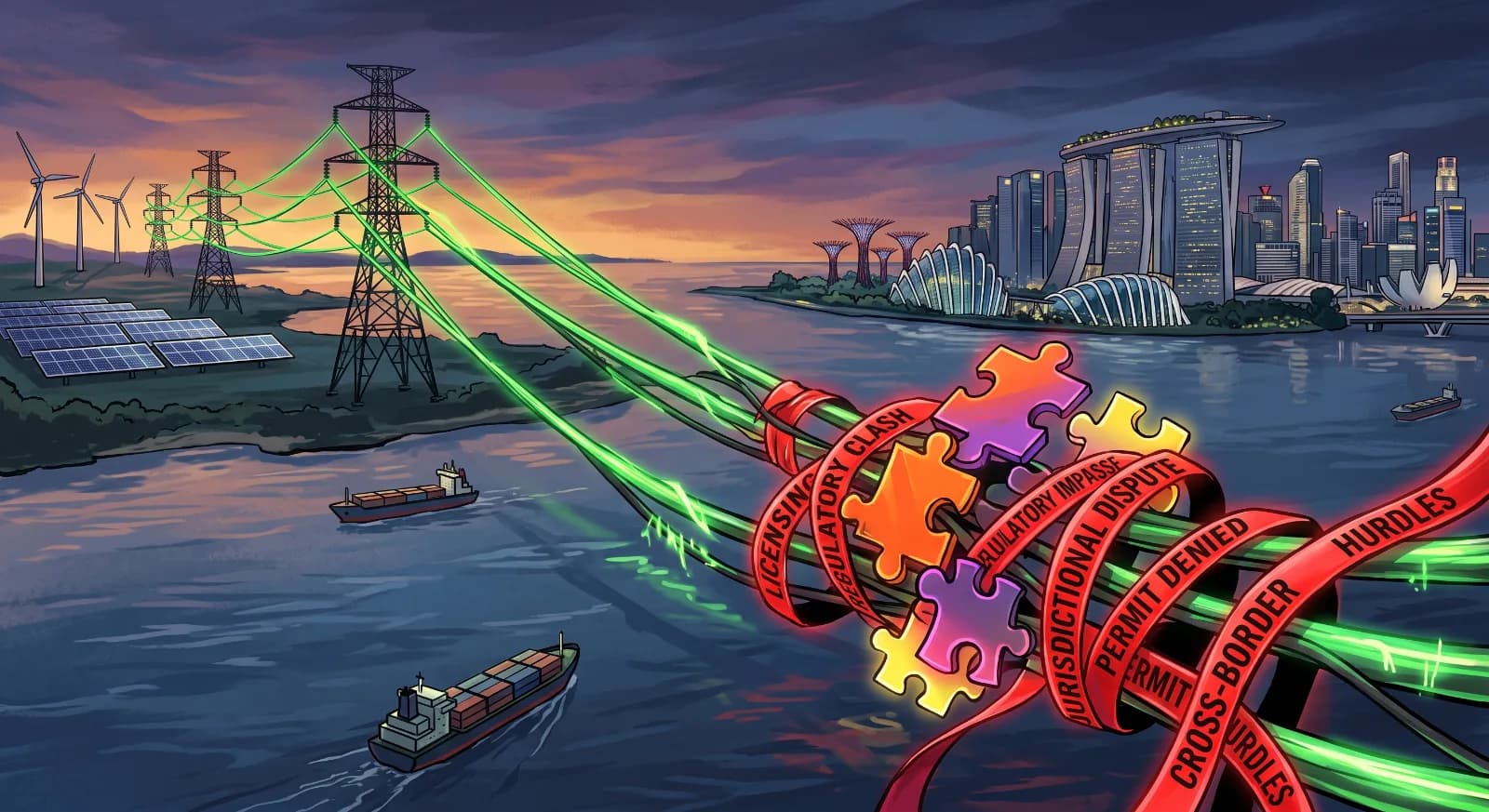
According to a piece published Thursday by Hannah Alcoseba Fernandez on Eco-Business, a new report from the Singapore Sustainable Finance Association identifies regulatory mismatches that threaten Singapore's plan to import 6 gigawatts of clean electricity through cross-border projects by 2035. Indonesia caps electricity export licenses at five-year renewal cycles, far shorter than the 20-to-30-year financing periods that major energy infrastructure typically requires, risking that a project becomes "stranded" if a license isn't renewed.
Malaysia's Sarawak state poses a different problem: it has no fixed license terms at all, leaving durations up to discretionary decisions rather than an established framework, which adds further uncertainty for lenders financing long-term projects. Banks typically require export licenses to remain valid for the full duration of a loan and treat that as a condition for releasing financing.
The wider ASEAN Power Grid, which aims to link the region's power systems through subsea cables and cross-border transmission, is estimated to require around $800 billion in investment. The report argues that without more predictable licensing frameworks in exporting countries, banks will struggle to underwrite the decades-long financing the grid's backers are counting on.
Hannah Alcoseba Fernandez, Eco-Business: https://www.eco-business.com/news/asean-power-grid-faces-licensing-hurdle-as-singapore-pursues-clean-power-imports/
This article was produced with the assistance of AI tools and reviewed by an editor before publication.