Southeast Asian energy ministers look to speed up regional power grid after oil shock
The Hormuz supply crisis has revived a decades-old plan to link national grids and trade clean electricity across borders, but financing and regulation remain hurdles.
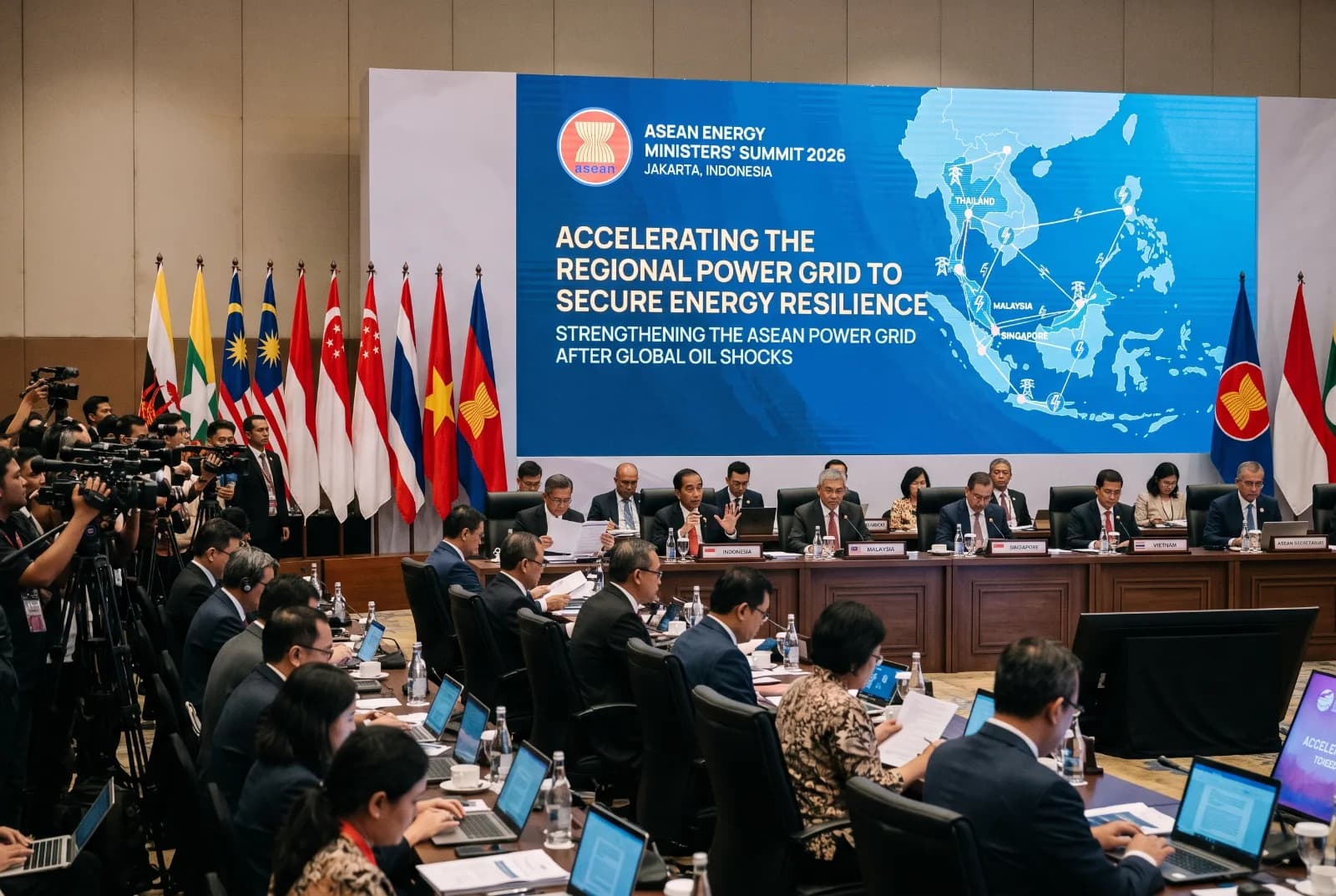
Energy ministers from the Association of Southeast Asian Nations (ASEAN) are considering speeding up a long-planned regional power grid after the halt in oil and gas shipments through the Strait of Hormuz exposed the region's dependence on fuel imports.
Meeting in the Philippines last week, ministers agreed on an enhanced planning framework for the ASEAN Power Grid, which aims to connect national grids by 2045 so countries can trade surplus renewable power. "The first study was to connect [by] 2045 — that's too far," Philippine Energy Secretary Sharon Garin said.
The supply crunch pushed governments to adopt emergency measures, from four-day work weeks to limits on air conditioning. Thailand restarted decommissioned coal plants, and the Philippines declared a national energy emergency. The region faces a $160 billion energy import bill this year.
First proposed in 1997, the grid has advanced slowly amid differing national regulations and the challenge of attracting private capital. The International Energy Agency (IEA) estimates $27 billion is needed for cross-border links by 2040. As of 2025, nine of 18 priority interconnection projects were operating.
Singapore, which relies on gas for more than 90% of its electricity, has the most at stake. It aims to import 6 gigawatts of low-carbon power by 2035, a target it is set to miss.
Monalisa Dimalanta, former chair of the Philippine Energy Regulatory Commission, said timelines remain unclear. "A 2045 vision cannot answer today's emergency," she said.
This brief is based on reporting by Chloé Farand, published Oct. 13, 2026, in Climate Home News. Read the original: https://www.climatechangenews.com/2026/10/13/se-asia-speeds-up-plan-for-connected-clean-power-grid-after-oil-shock/
This article was produced with the assistance of AI tools and reviewed by an editor before publication.