EU ban on vague green claims such as 'eco-friendly' takes effect
Companies can no longer market products as climate neutral on the strength of carbon offsets, and future climate pledges must be backed by a verified plan.
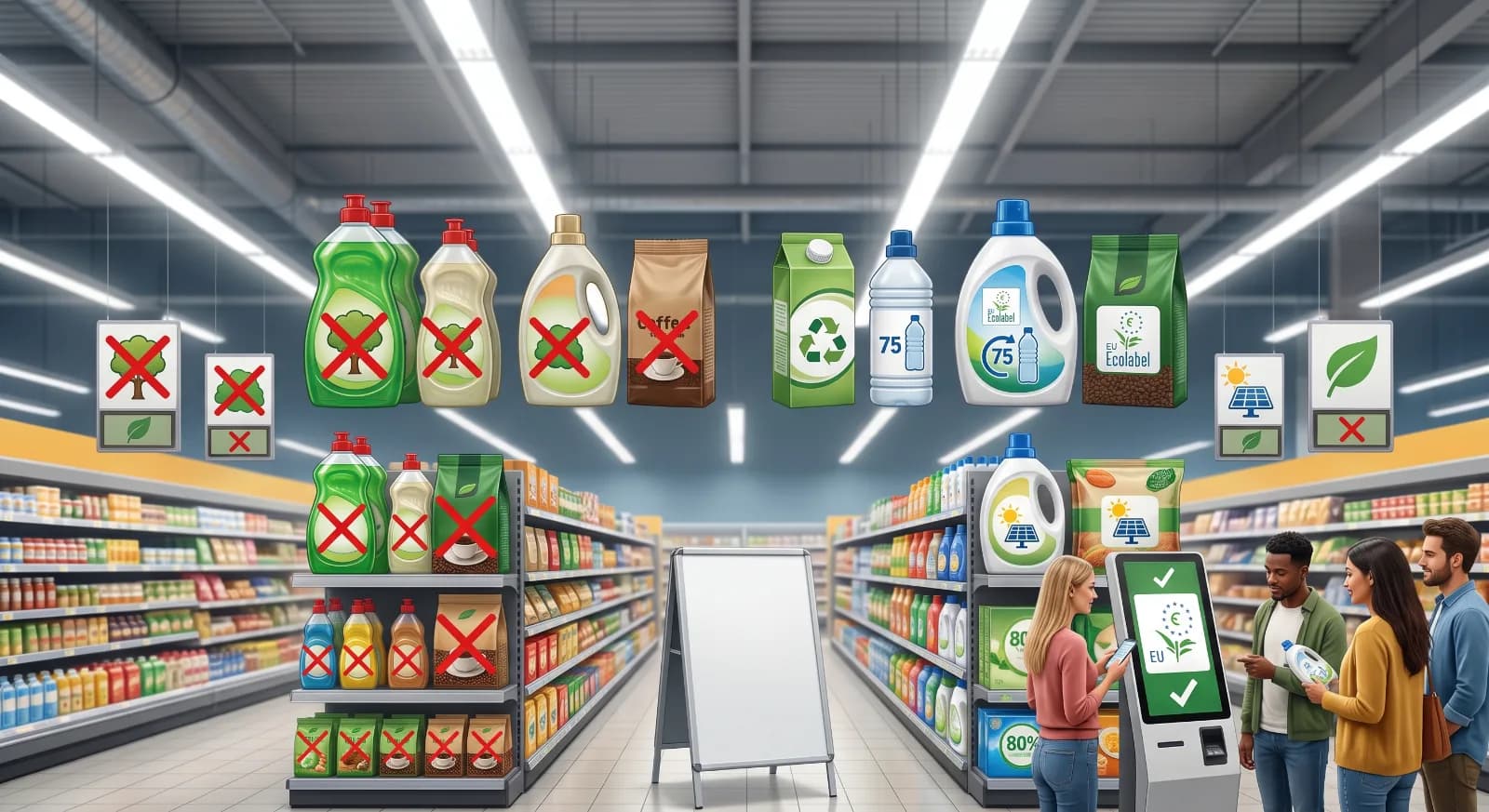
Companies selling to consumers in the European Union (EU) can no longer call products "environmentally friendly" or "biodegradable" without proof, after the bloc's Empowering Consumers for the Green Transition directive took effect Sunday.
The rules, adopted by EU lawmakers in 2024, also bar claims that a product has a neutral, reduced or positive climate impact when that claim rests on carbon offsetting. Sustainability labels are now allowed only if they are based on official certification schemes or set up by public authorities.
The directive also targets products built to wear out early. Guarantee information must be displayed more prominently, a common EU label will highlight goods with extended guarantees, and sellers may not make unfounded durability claims, urge customers to replace consumables sooner than needed or present goods as repairable when they are not.
Companies promoting future environmental targets must now publish a detailed, realistic implementation plan with deadlines and allocated resources, verified by an independent expert.
The measure was part of a wider package of European Commission proposals on consumers and the circular economy. A separate Green Claims Directive, meant to set detailed rules for proving environmental claims, was effectively paused last year over concerns about its burden on small businesses and has not been revisited, ESG Today reported.
This brief is based on reporting by Mark Segal, published Sept. 28, 2026, by ESG Today. Read the original: https://www.esgtoday.com/new-eu-anti-greenwashing-rules-enter-into-force/
This article was produced with the assistance of AI tools and reviewed by an editor before publication.