Nepal's top court banned building in protected areas - Then came 10 hydropower permits
The Supreme Court struck down the law in January 2025, but the full text of the ruling has still not been published. A Mongabay investigation based on freedom-of-information requests found the government approved 10 hydropower projects inside protected areas in the gap.
More than a year and a half has passed since Nepal's Supreme Court struck down provisions allowing infrastructure construction in protected areas, yet the full text of the ruling has still not been published. According to a Mongabay investigation based on freedom-of-information requests, during this period of legal uncertainty the government has granted land-use and environmental clearances to 10 privately owned hydropower projects inside protected areas and buffer zones since January 2026.
According to figures reported by Mongabay, these projects have a combined installed capacity of more than 360 MW and affect roughly 85 hectares of forest land. The affected areas include the Kanchanjunga, Gaurishankar and Annapurna conservation areas, along with the buffer zones of Makalu Barun and Langtang national parks. The names of the projects, their owners and their individual capacities could not be verified in any independent source outside Mongabay or in publications by the relevant Nepali agencies themselves; the breakdown therefore rests on a single source.
What the ruling said
On 15 January 2025, the Constitutional Bench of Nepal's Supreme Court, presided over by Chief Justice Prakash Man Singh Raut, declared invalid sections 5A and 6(1A), added to the National Parks and Wildlife Conservation Act in 2024. Those provisions had opened the way for projects such as hydropower plants, hotels and railways to be permitted inside national parks. The reasoning of the ruling emphasised the principle of environmentally sensitive development and intergenerational equity. The decision was reported in the same terms by AFP.
The case was brought by a group of lawyers who argued that the 2024 amendment violated Article 30 of Nepal's Constitution, which guarantees the right to a clean and healthy environment, as well as obligations arising from the Convention on Biological Diversity; the petition was led by Dil Raj Khanal.
The dispute has deeper roots. A procedure titled "Construction of Physical Infrastructure in Protected Areas" was published in Nepal's official gazette on 4 January 2024. It allowed projects of 100 MW and above located entirely within a conservation area to leave only 10 percent of river flow in the riverbed during the dry season. The framework, expanded by ordinance in April 2024, was turned into law in July 2024.
How the administration reads the gap
According to Mongabay's investigation, officials say that because the full text of the ruling has not been published, they are relying on 2023 guidelines and on cabinet decisions covering projects licensed before July 2024. Senior advocate Prakash Mani Sharma, also quoted in the same investigation, argues that permitting hydropower projects in protected areas amounts to a misreading of the court's decision.
The permits began under the interim government formed after the September 2025 protests and continued despite the subsequent change of government. Meanwhile, on 9 June 2026, Nepal's Council of Ministers approved the use of national forest land for the Lower Arun, Lower Nyadi Khola, Bhunchha Khola and Tadi Khola projects. In May 2026, the Independent Power Producers' Association Nepal (IPPAN) met Minister of Agriculture, Forests and Environment Gita Chaudhary to seek the restart of five projects halted on the instruction of Langtang National Park's administration.
Industry pressure was voiced openly after the ruling: in a statement dated 26 January 2025, IPPAN argued that the decision had thrown into doubt the future of 267 hydropower projects with a combined installed capacity of 19,736 MW. That figure is the association's own calculation and has not been verified by an independent body.
According to data from the Department of National Parks and Wildlife Conservation (DNPWC), Nepal's protected area system comprises 12 national parks, 1 wildlife reserve, 1 hunting reserve, 6 conservation areas and 13 buffer zones, covering 23.39 percent of the country's surface. According to figures reported by Mongabay, private producers supply roughly 63 percent of the country's 2,991 MW of installed hydropower capacity.
A similar dispute in Türkiye
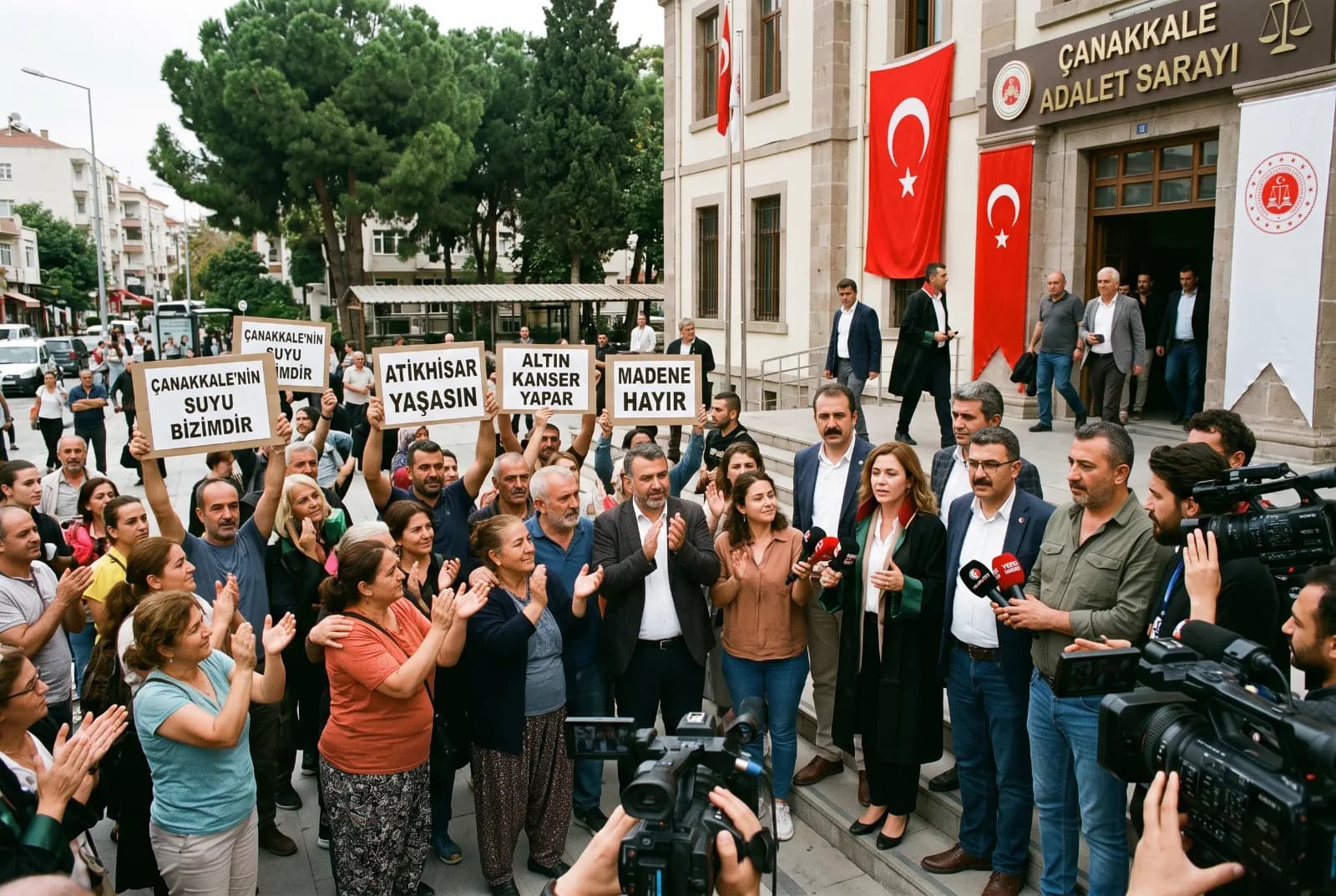
Opening protected areas to investment is also a dispute being fought through the courts in Türkiye. Law No. 7576 was adopted on 11 March 2026 and entered into force upon publication in the Official Gazette dated 19 March 2026. The legislation consolidated powers over planning, permitting, inspection and tourism allocation in protected areas within the General Directorate of Nature Conservation and National Parks.
According to the Grand National Assembly of Türkiye's briefing on the legislation, in national parks and nature parks located outside Culture and Tourism Conservation and Development Regions and Tourism Centres, permits may be granted to natural persons and private legal entities to construct buildings and facilities for tourism purposes, provided there is public benefit and the works fall within a plan. The amendment has been criticised by some professional bodies and public administration experts on the grounds that it makes construction in protected areas easier.
There is a comparable body of case law on the judicial side. A principle decision regulating hydropower permits in natural conservation sites came before the 6th Chamber of the Council of State. Citing the Constitutional Court's decision of 5 July 2012 (E:2011/27, K:2012/101), the Council of State held that the rule allowing renewable energy facilities in national parks, nature parks, nature conservation areas and natural conservation sites subject to a favourable opinion from the relevant ministry or the regional conservation board does not amount to an unconditional permission.
No up-to-date official breakdown could be found of how many hydropower plants are currently licensed inside national parks and nature conservation areas in Türkiye. What links the picture in the two countries is this: the real boundary of protected status is set not by the text of the law but by how the administration applies that text. Nepal's case shows that an unpublished ruling leaves the administration room to produce its own interpretation.
This article was produced with the assistance of AI tools and reviewed by an editor before publication.