'Climate finance makes strong economic sense': Interview with AIIB Vice President Dr. Ajay Pandey
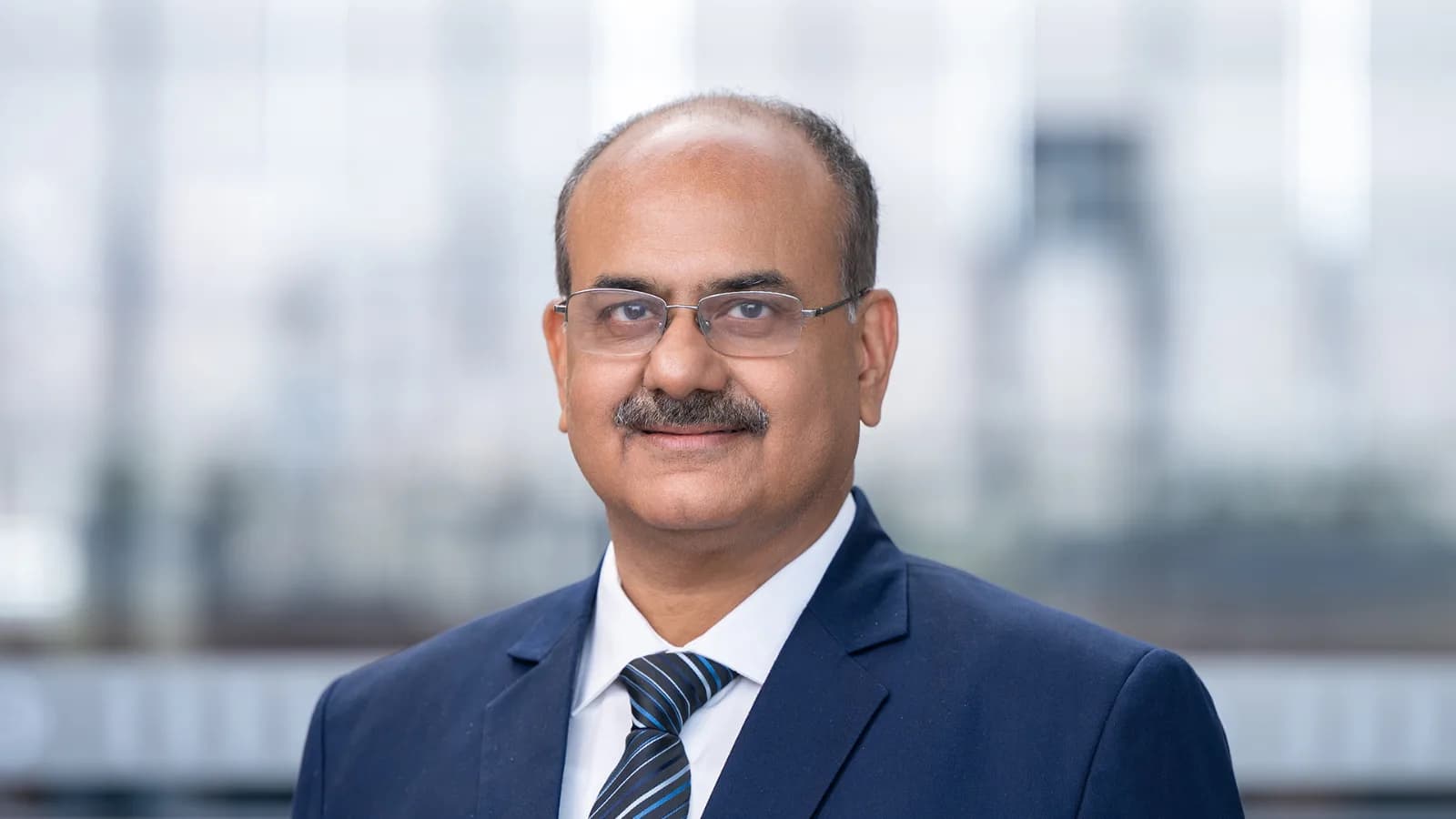
In an exclusive interview with Sustain&Play, AIIB Vice President and former Indian Finance Secretary Dr. Ajay Pandey argues that climate finance is no longer just a moral duty - it simply makes strong economic sense.
As Western sovereigns scale back direct bilateral climate aid, the global spotlight is turning to Multilateral Development Banks to bridge the trillion-dollar gap.
Speaking from the Istanbul Climate Finance Summit, AIIB Vice President and former Indian Finance Secretary Dr. Ajay Pandey gave an exclusive interview to Sustain&Play.
Dr. Pandey argues that the solution isn't just more sovereign debt. From mobilizing private capital to utilizing Türkiye as a living blueprint for green infrastructure, the former Indian Finance Secretary explains why sustainable finance is no longer just a moral duty - it is the smartest investment on the table.
Given Western sovereigns scaling back direct bilateral climate aid, can multilateral development banks (MDBs) realistically absorb the shortfall, or are we facing an insurmountable climate financing deficit?
Dr. Ajay Bhushan Pandey: I look at this problem a little differently. The climate needs, particularly for infrastructure, are so huge that a lot remains to be done. But what the MDBs and international financial institutions (IFIs) can do is supplement the efforts of governments and help countries create enabling conditions so that infrastructure is financed through a multiplicity of instruments.
For example, let me give the example of our own bank, AIIB. We have multiple instruments. We provide loans to sovereign governments for infrastructure, but we also provide non-sovereign loans. These non-sovereign loans are of different types: direct corporate financing, corporate lending, or project lending. We can also give finance to financial institutions, and they, in turn, can provide loans to projects or further lending for infrastructure. We provide guarantees, we provide credit enhancements, and we subscribe to green bonds issued by private corporations.
We work very closely with other MDBs to finance these projects because it is beyond the balance sheet of one MDB or one country to finance all of them alone. We have to bring in private capital. In any project that we fund, apart from our direct financing, it is also able to attract a lot of private capital. If you look at last year, AIIB's total approval was about $11 billion, and out of that, approximately $7.5 billion was towards climate finance. This financing was able to mobilize private capital directly and indirectly. What is required at this time is a coordinated approach where MDBs, IFIs, governments, and the private sector all join hands.
In infrastructure, the most important player is the government. Traditionally, it was the government that developed infrastructure around the world. But as time went on, the fiscal space available to governments became less and less, making it very difficult for them to fund infrastructure directly. What governments can do is create enabling conditions where the private sector can come in and build the infrastructure, supported by an appropriate regulatory environment through which the private sector can recover costs and make some profit for its shareholders.
About three decades ago, in many developing countries, electricity generation and transmission were entirely handled by the government sector. Today, most of the capacities getting added, particularly in renewables, are being done through the private sector. How are they able to execute these projects and make them bankable? The reason is the regulatory regime established by the government, which provides tariff certainty and guarantees that their electricity will be purchased. So, the role of the government is not only to finance directly but to enable private capital to flow in through sound policy.
How does AIIB balance its identity as an Asia-led institution with the mandate to build global consensus on climate investment—especially as traditional donor priorities shift?
Dr. Ajay Bhushan Pandey: At AIIB, we are deeply focused on green infrastructure; it is one of our main thematic priorities. We ensure that every project we approve is Paris Agreement-aligned. We also meticulously track how much of our financing goes toward climate. As I mentioned, out of our $11 billion in approved projects last year, around 71% was directed toward climate finance.
Today, traditional donors also insist that the projects we finance—especially when we blend grant money with our loan money—must be sustainable, green, and Paris Agreement-aligned. These requirements actually gel very well with AIIB’s main thematic priorities. In that sense, our focus on green projects and climate investments is perfectly aligned with shifting donor priorities.
Regarding the global consensus on climate investment, my own experience is that green infrastructure is good not only from a climate point of view, but it has now started making a very strong economic sense. For example, if you compare the cost of a coal-based power plant with a solar-based power plant today, the costs for solar have come down over the last decade to such a level that it is becoming far more beneficial to have a solar or wind plant.
Similarly, with the electrification of transport vehicles, electric cars used to be very costly seven to ten years ago. Now, even that cost is coming down, allowing them to compete directly with fossil fuel-based vehicles. I am currently in Istanbul for the Climate Finance Summit, and the Executive Director of the International Energy Agency (IEA) echoed the exact same view: today, climate finance is not just something people feel they should do for the climate; it is making a strong economic sense. Therefore, it is entirely possible to build a global consensus on climate investment, because this consensus will be based not only on climate considerations but on a solid economic foundation.
Türkiye is now AIIB’s second-largest borrower, hosting projects ranging from the Istanbul Waste-to-Energy facility to Akbank’s Sustainable Energy Facility. What makes Türkiye uniquely suited for scaling bankable climate infrastructure, and what structural hurdles remain?
Dr. Ajay Bhushan Pandey: Türkiye actually provides a remarkable example of our investment capabilities. It utilizes almost most of the financial instruments which the AIIB offers. Türkiye is our second-largest investment destination with more than 40 projects, costing more than $9 billion US dollars. And there are many, many more projects in the pipeline.
The important point to note here is that this investment is not only in the form of loans to the sovereign government. While we do have very important sovereign projects where we have a sovereign guarantee, a large number of projects are also in the private sector. We have a very strong relationship with many development banks here, whether it is TSKB, the Türkiye Exim Bank, or TKYB. We have a number of projects flowing through these financial institutions, and we have also subscribed to green bonds issued by Turkish financial institutions.
What makes Türkiye uniquely suited is the sheer range of sectors and instruments involved. We have projects across energy, waste, and transport. For instance, one of the very large projects we recently approved is the $1.5 billion North Crossing corridor railway project. This focuses on electrification, allowing traffic to be shifted from roads to railways driven by electricity. Similarly, we have projects for the electrification of cars, renewable solar energy, and the Antalya airport extension.
There are 40 such projects across a diverse range of sectors, utilizing a wide range of financial instruments. If one has to see the various instruments and the various sectors where the AIIB can successfully finance climate infrastructure, one can look at Türkiye. Türkiye provides an active, living example of what is entirely possible.
You have served as the Finance Secretary of India, do you think the world is ready to convert to a sustainable finance and economy model or do you think there is still too much to do?
Dr. Ajay Bhushan Pandey: Having served as the Finance Secretary of India, my own experience tells me that today we are in a much better place to give greater emphasis to the climate and to successfully finance climate projects. As I said earlier, financing climate projects is actually making much more economic sense today than what it did perhaps two decades back.
Because of technology and scale, the dynamics have fundamentally changed. Just like in solar energy—when there were very few solar power plants, the cost of solar energy was incredibly high. But as it scaled up, demand grew, and people started shifting to it, the cost naturally came down. We are seeing the exact same thing happening with electric vehicles, and we can see it taking shape in other sectors as well. Today, it is possible to integrate climate into the fundamental design of a project and yet not pay much additional cost.
That is exactly what we are trying to do at AIIB. We are working closely with national governments and supporting climate policy-based lending. We work with governments to support them in their climate agenda, help create institutions, build capacity, and help them deliver those policies where they can actively enable investments into the climate and attract private
As we head toward COP31, the central debate remains whether the international financial architecture can move fast enough. Is the current MDB system fundamentally equipped for this transition, or does it require a major structural overhaul to meet global targets?
Dr. Ajay Bhushan Pandey: I think this is a very important question: can we move fast enough? What is required is highly concerted action on the part of the governments, the MDBs, and the financial institutions, where we can actively identify projects and manage the full cycle.
What it essentially requires is that all these MDBs, IFIs, and governments have to engage early. If we get involved upstream, early in the design phase when projects are just being conceptualized, we can properly help the government or the project agencies in the preparation of the project. That is where technical assistance and donor agencies can come in.
If we can take a project and build all these critical climate considerations into its fundamental design, then the project naturally becomes bankable. If it becomes bankable, then implementation can seamlessly take place, and the money can be disbursed.
I think what is most required right now is a great amount of coordination from end to end—from the upstream conception during project preparation, through project implementation, and I would even go beyond that into project maintenance. If we can solve this specific problem and coordinate well, then I believe we can certainly enhance our delivery capacity and do significantly more for the entire global climate agenda.