UK tells carbon capture industry to expect less public money
Government officials told the sector's annual conference that tight budgets will force hard choices on which projects move ahead, and how fast.
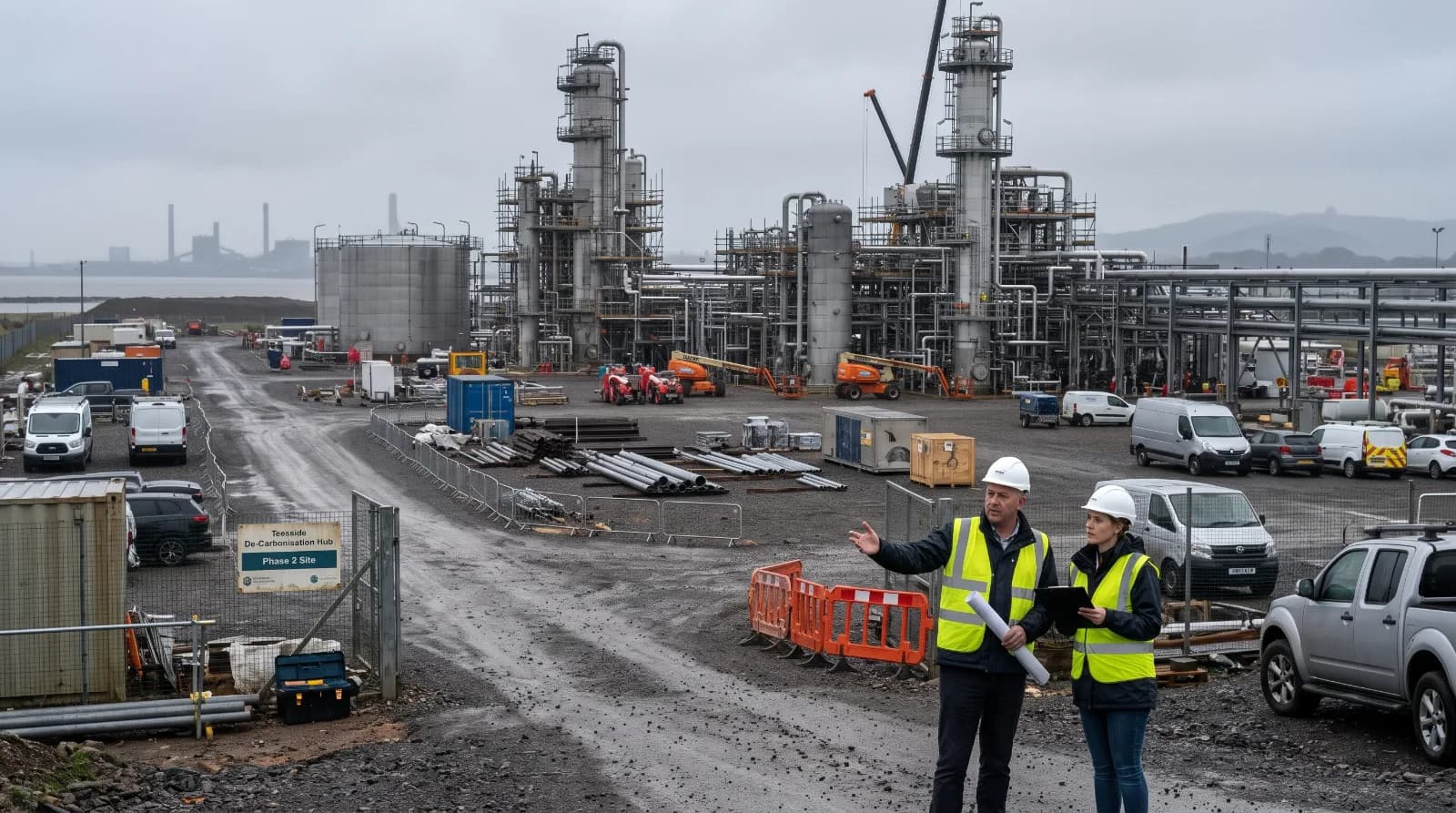
The British government told the carbon capture industry Tuesday to prepare for less taxpayer support in the future, as it reportedly looks to cut spending on emissions-reduction projects to help pay for higher military spending.
The warning raises questions about how the U.K. will meet its climate goals. Eoin Devane, acting director of net zero at the Climate Change Committee, the government's official advisers, said the government is relying on carbon capture and storage (CCS) to meet its carbon budgets and 2050 net zero target but has "insufficient plans" to deliver those cuts.
"It is no secret that we are operating in a challenging fiscal environment," Martin McCluskey, a junior minister in the Department for Energy Security and Net Zero, told the Carbon Capture and Storage Association (CCSA) conference in London. He said the next phase of the carbon capture, use and storage program would come amid "broader, difficult decisions on funding."
Asked whether the government could no longer support future carbon transport and storage projects at past levels, Stefanie Murphy, the department's industrial carbon capture lead, replied, "I think yes."
CCSA Chief Executive Olivia Powis warned that if government commitment weakens, "investment and developers will not simply wait. They will go elsewhere."
CCS traps carbon dioxide from sources such as cement kilns and stores it underground. The Intergovernmental Panel on Climate Change (IPCC) says it is needed for hard-to-clean industries but is among the costliest ways to cut emissions.
This brief is based on an article published Oct. 14, 2026, by Joe Lo in Climate Home News. Read the original: https://www.climatechangenews.com/2026/10/14/carbon-capture-industry-faces-tough-future-as-uk-raids-green-spending/
This article was produced with the assistance of AI tools and reviewed by an editor before publication.