US-Venezuela oil deal raises alarm over spills and transparency
A $100 billion U.S.-Venezuela oil deal promises economic revival but raises fears over spills, emissions, and transparency.
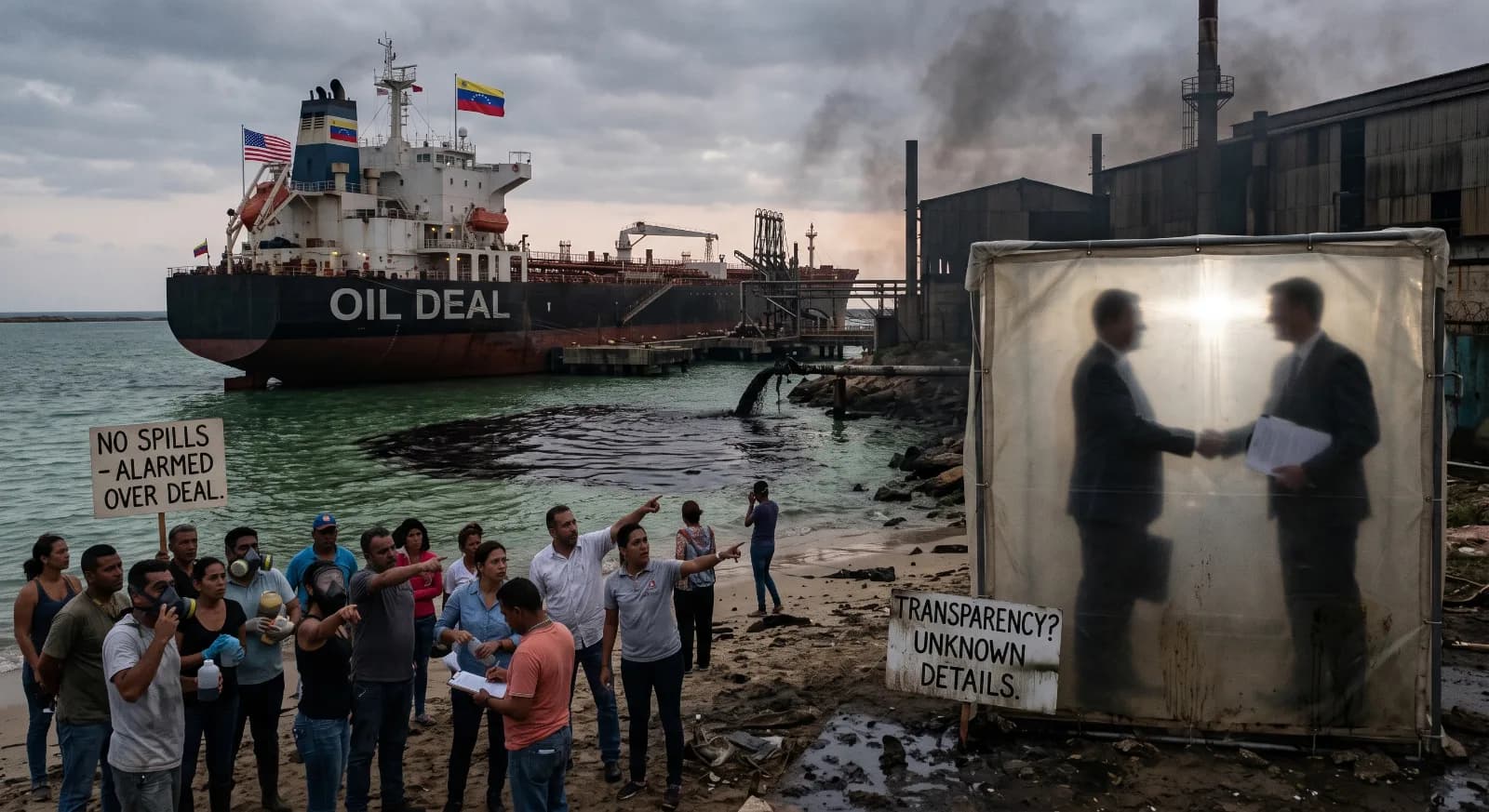
The United States has struck a deal granting access to more than 65 billion barrels of Venezuela's proven oil reserves, with up to $100 billion earmarked for new infrastructure over a 25-year agreement. Structured through the private company North American Blue Energy Partners, the deal gives the U.S. a 35% equity stake and rights to a large share of production from 17 oil fields holding 100-year concessions.
Venezuelan officials have framed the agreement as a path to economic recovery, projecting $209 billion in revenue over its lifetime. But environmental and human rights groups, including the Venezuelan Program for Education-Action on Human Rights and Clima21, warn the deal lacks transparency about which fields will be developed and whether they overlap with protected areas, an estimated 70,785 square kilometers of Venezuela's oil blocks already do.
Venezuelan crude is unusually high in sulfur and heavy hydrocarbons, producing more emissions to refine, and the country's oil sector already accounts for roughly half of Central and South America's methane emissions from flaring. Researchers say the government under-reports the true number of oil spills each year, with Lake Maracaibo's fishing communities among the most exposed. Advocacy groups are calling for binding emissions targets and a published environmental protection plan before development proceeds.
Based on reporting by Maxwell Radwin for Mongabay. Read the original: https://news.mongabay.com/2026/09/venezuelas-historic-oil-deal-with-the-us-reignites-environmental-human-rights-concerns/
This article was produced with the assistance of AI tools and reviewed by an editor before publication.