Contaminated water is forcing Sri Lanka's low-income households to pay more for less
As reservoirs run low and old pipes deliver muddy tap water, low-income communities in and around Colombo are paying steep premiums for water that isn't always safe to drink.
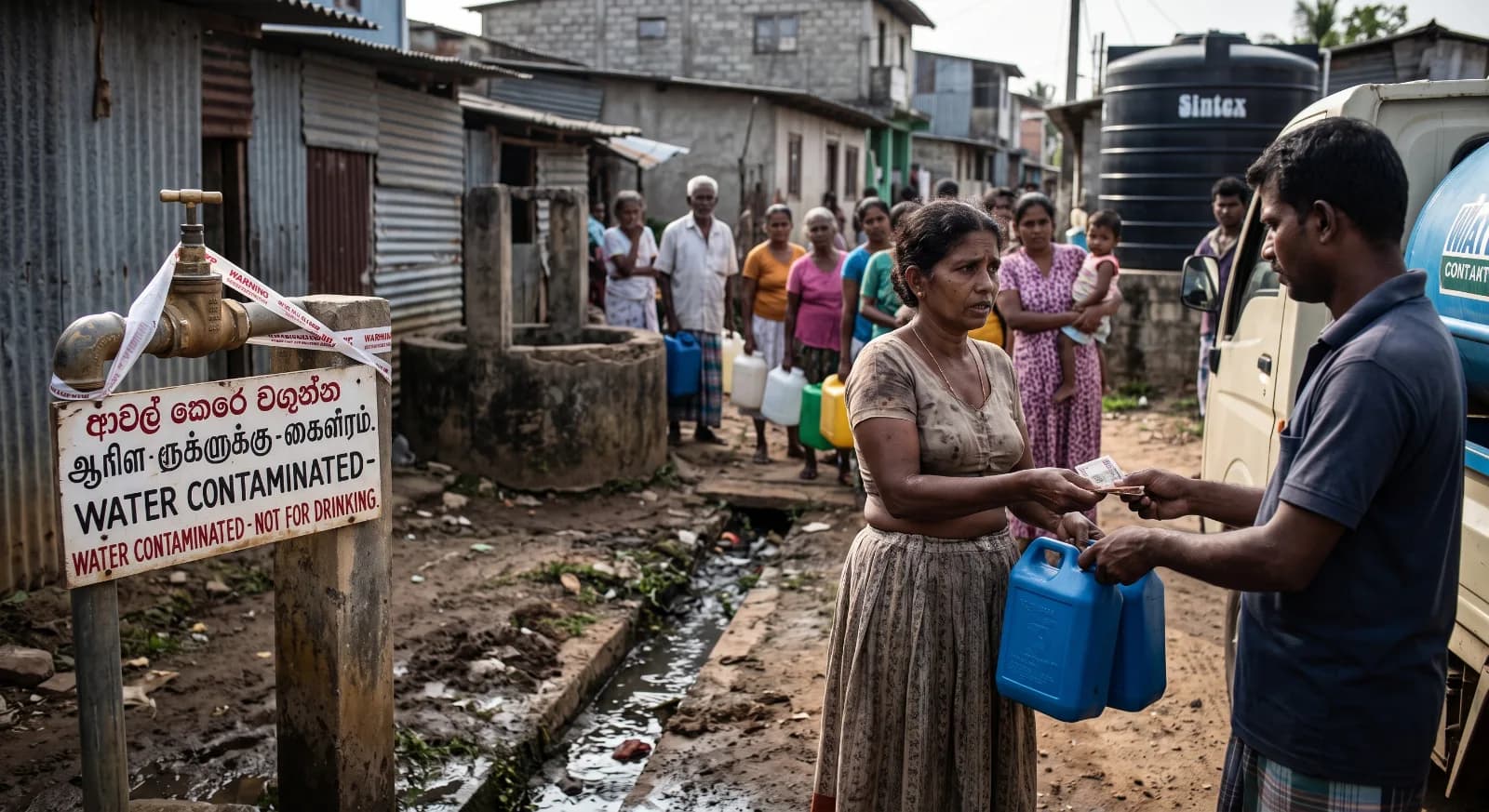
Households in low-income settlements around Colombo, Sri Lanka, say they regularly receive muddy tap water and must rely on filters or bottled water to stay safe, even as the city requires roughly 1 million cubic meters of water a day. "Immediately after water cuts, water turns muddy. We use filters to ensure drinking water is clean," said resident Linda Arulanantham.
Access to piped water from the National Water Supply and Drainage Board rose from 43.1% of households in the Western Province in 2012 to 58.7% in 2024, and 367 new community water schemes were introduced between 2019 and 2021, though only 170 are complete. Ananda Vijitha Kumara Mapa, director general of Sri Lanka's Department of National Community Water Supply, said water sources have degraded over the past two decades: "Water sources became contaminated due to development, agricultural expansion, and livestock farms."
Major reservoirs stood at just 55% of capacity as of Aug. 25, and consultant physician Novil Wijesekara said scarcity can push people toward unsafe sources: "When water becomes scarce, people may be forced to use alternative or less protected water sources." Water tariffs in low-income settlements range from 100 to 1,600 rupees, or roughly 30 cents to nearly $5, per unit, a significant cost for households that make up about 73% of the water utility's revenue from domestic consumers.
Based on reporting by Kamanthi Wickramasinghe for Mongabay, via Eco-Business. Read the original: https://www.eco-business.com/news/poor-urban-water-quality-threatens-low-income-communities-in-sri-lanka/
This article was produced with the assistance of AI tools and reviewed by an editor before publication.