Cigarette butts make up 12% of litter in the world's waters, study finds
A review of 130 studies from 55 countries found beaches are the worst hotspots, and that smoking bans backed by fines help.
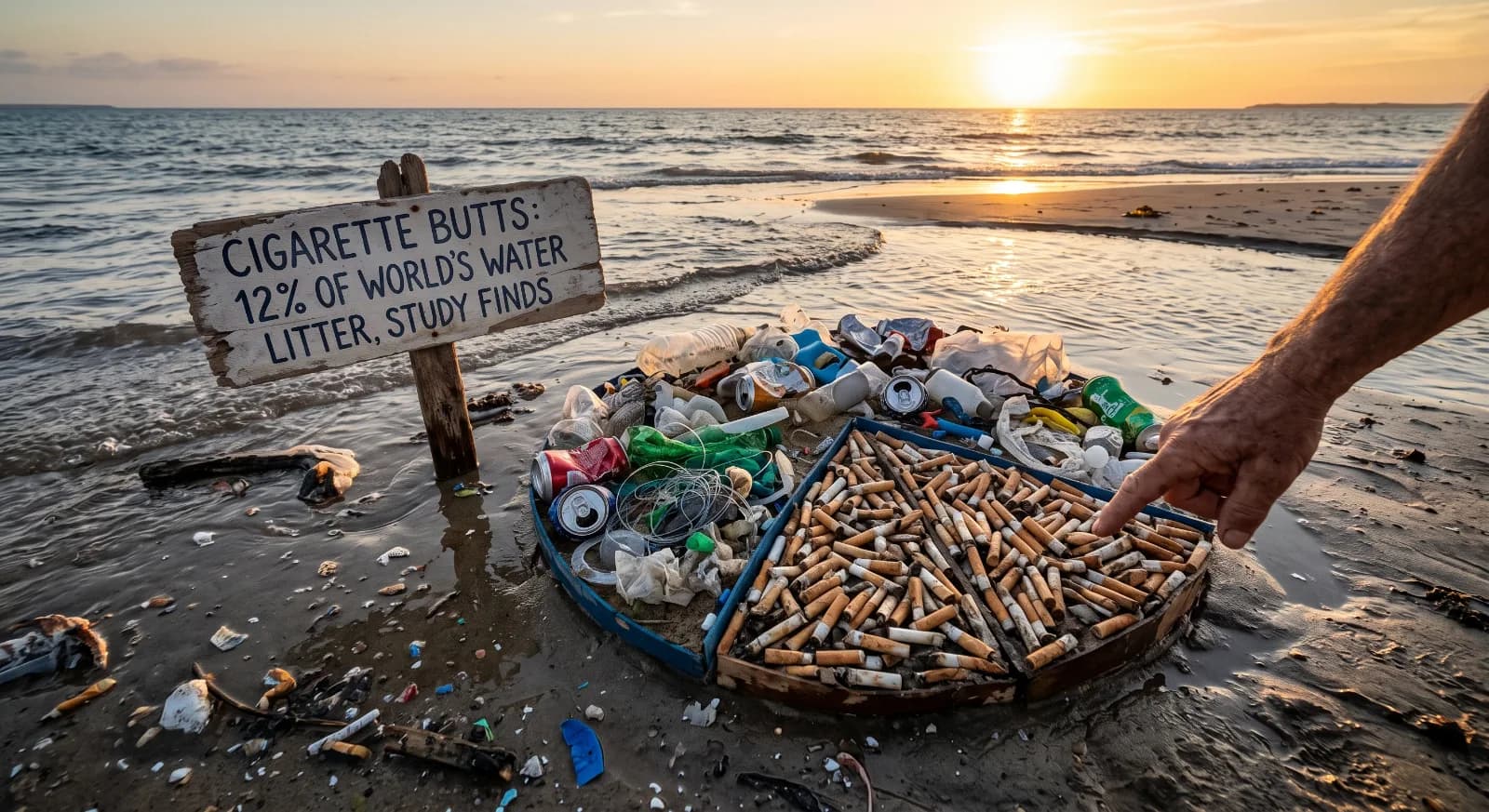
Cigarette butts account for about 12% of the litter found in rivers, lakes and coastal areas, according to a global review of 130 studies from 55 countries conducted between 2013 and 2024.
Across all the ecosystems studied, on land and in water, researchers found on average one butt every 4 square meters. At some coastal sites in Iran, Chile, Brazil and Peru, cigarette butts made up more than half of all litter. Beaches were the main hotspots.
Filters are made of cellulose acetate, a plastic that breaks down into microplastics, while the rest of a butt can leach heavy metals, nicotine and other toxic compounds into water. “It's often described as a kind of ‘chemical bomb,’” said lead author Victor Vasques Ribeiro of Brazil's Federal University of São Paulo.
Butts were nearly five times as common in unprotected areas as in protected ones, though even protected sites were not free of them. The review found that beach smoking bans in countries including Spain, Italy, Mexico and Malaysia reduced butt litter, especially when violations carried fines.
“There wouldn't be butts in these environments if there wasn't cigarette consumption,” Ribeiro said.
This brief is based on reporting by Shanna Hanbury, published Sept. 22, 2026, on Mongabay. Read the original: https://news.mongabay.com/short-article/2026/09/cigarette-butts-make-up-12-of-aquatic-litter-global-review-finds/
This article was produced with the assistance of AI tools and reviewed by an editor before publication.