Pakistan turns to Chinese AI weather system MAZU to strengthen climate early warnings
Pakistan is the first country to deploy MAZU, a Chinese AI-powered forecasting system, as it works to strengthen early warnings against worsening floods and extreme weather.
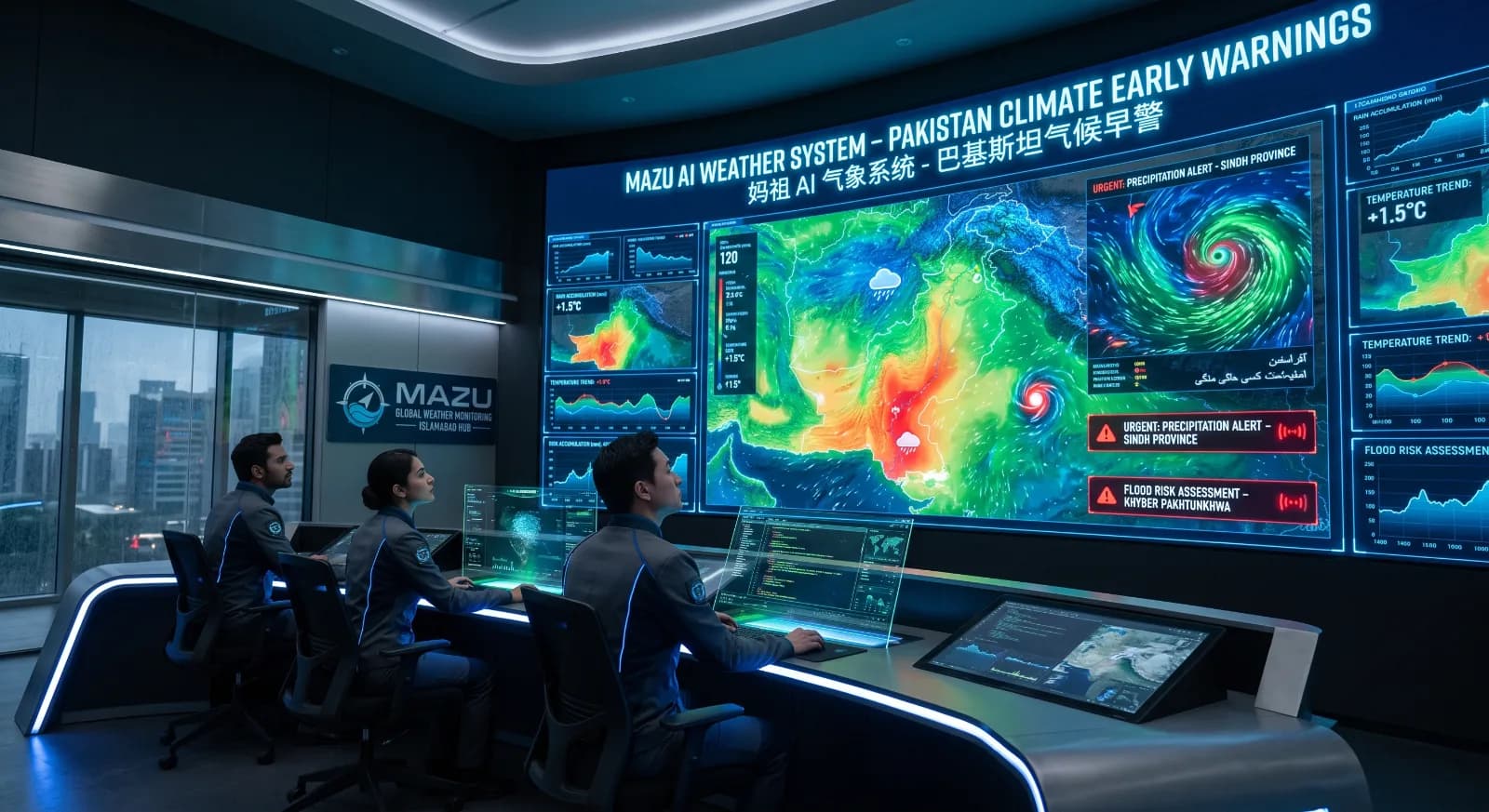
Pakistan has become the first country to deploy MAZU, a Chinese AI-powered weather forecasting system developed by the China Meteorological Administration, as it works to strengthen early warning systems against worsening floods and extreme weather, Dialogue Earth reported. The Pakistan Meteorological Department has used a version of the system tailored to local data since October 2025.
MAZU, short for "multi-hazard, alert, zero-gap and universal," combines conventional meteorology, satellite and radar data, ground-station observations and AI to generate faster forecasts and alerts. Pakistani officials say the system has helped forecasters make quicker, better-informed decisions, though they stress it cannot prevent extreme weather itself. China has since expanded MAZU to Djibouti, Ethiopia, Mongolia, Jordan, Sri Lanka and the Solomon Islands, with more than 40 additional countries running cloud-based trials; Chinese President Xi Jinping pledged in July to extend the system to 30 countries over the next five years.
Climate and weather experts told Dialogue Earth the tool is a useful addition but not a stand-alone fix. An effective early warning system also requires strong disaster risk management, communication and response capacity, areas where gaps remain regardless of forecasting technology. Its long-term value in Pakistan, they said, will depend on data quality and how well local authorities act on its warnings.
This brief is based on reporting by Zofeen Ebrahim for Dialogue Earth. Read the original: https://dialogue.earth/en/climate/can-a-chinese-ai-system-help-pakistan-manage-the-impacts-of-a-changing-climate/
This article was produced with the assistance of AI tools and reviewed by an editor before publication.