Study finds elevated toxic metals in Maui residents months after the island's deadly 2023 wildfires
Antimony levels among participants were nearly 40 times a pre-fire national benchmark, and higher exposure was linked to weaker lung function.
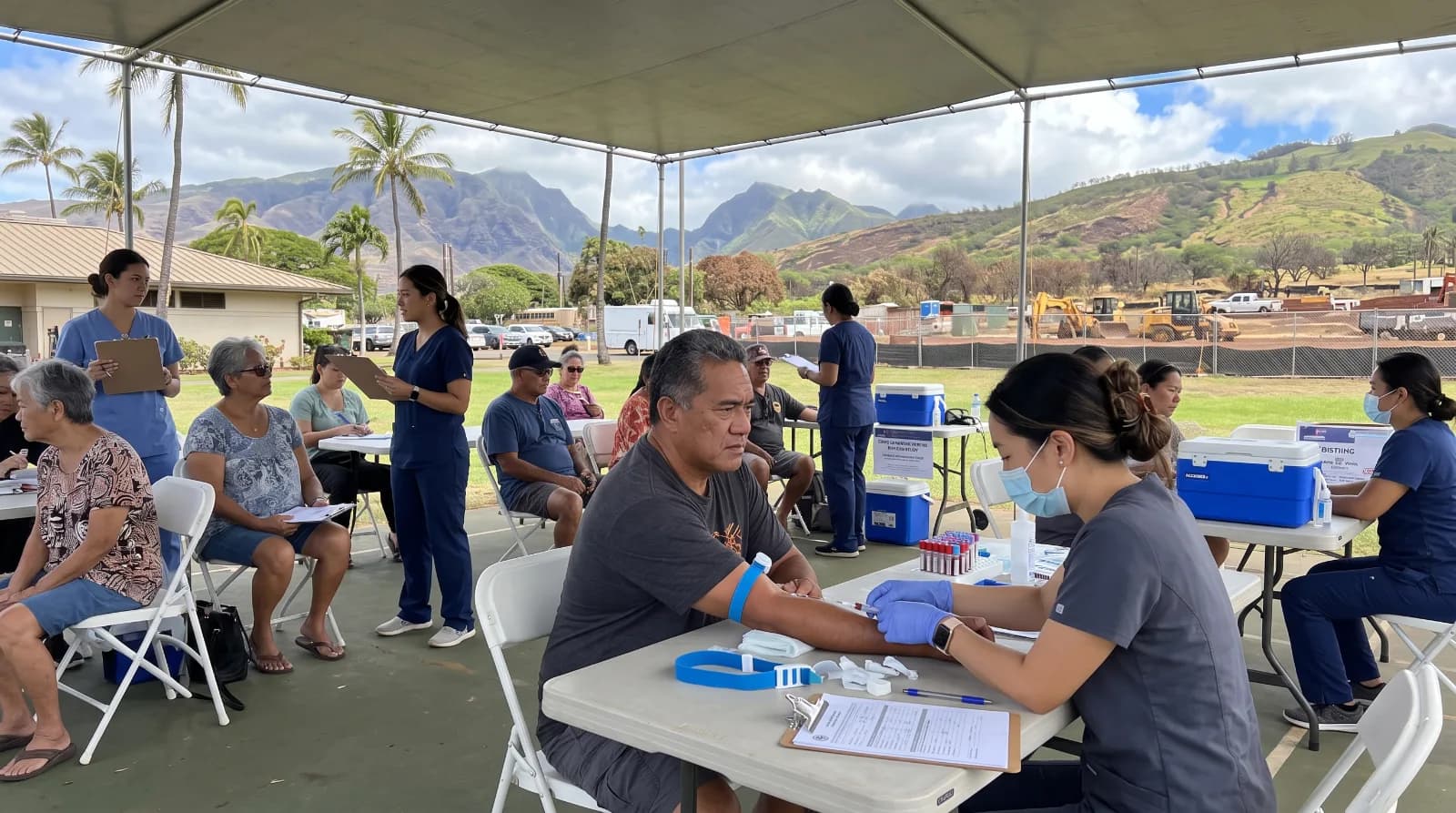
Maui residents had elevated levels of several toxic metals in their bodies months after the August 2023 wildfires that killed more than 100 people, and higher exposure was tied to poorer lung function, according to University of Hawaiʻi at Mānoa research reported Friday by Joseph Lee in Grist.
The Maui Wildfire Exposure Study (MauiWES) measured 24 metals in urine samples from 1,400 adults six to 18 months after the fires. Compared with a nationwide health survey taken before the disaster, participants had 2.2 times as much arsenic, 2.3 times as much barium, 3.8 times as much manganese and nearly 40 times as much antimony, a metal used in flame retardants that has been linked to lung irritation.
Earlier MauiWES findings showed more than 1 in 5 residents had reduced lung function.
Because no comparable data exist from before the fires, researchers cannot yet say how much of the contamination came from the disaster and how much from earlier agricultural and industrial activity on the island. The study's next phase, backed by a $3.6 million grant from the National Institute of Environmental Health Sciences, will examine that history.
"What we consider and sometimes look at as a one-time event isn't really one-time anymore," said Alika Maunakea, a co-director of the study.
"The fire may be out, but the catastrophe is not over by any stretch of the imagination," said Noelani Ahia, co-founder of the volunteer group Maui Medic Healers Hui, which still runs a free clinic in Lāhainā.
This brief is based on an article published Oct. 16, 2026, by Joseph Lee in Grist. Read the original: https://grist.org/indigenous/long-after-the-maui-fires-toxic-metals-linger-in-residents-bodies/
This article was produced with the assistance of AI tools and reviewed by an editor before publication.