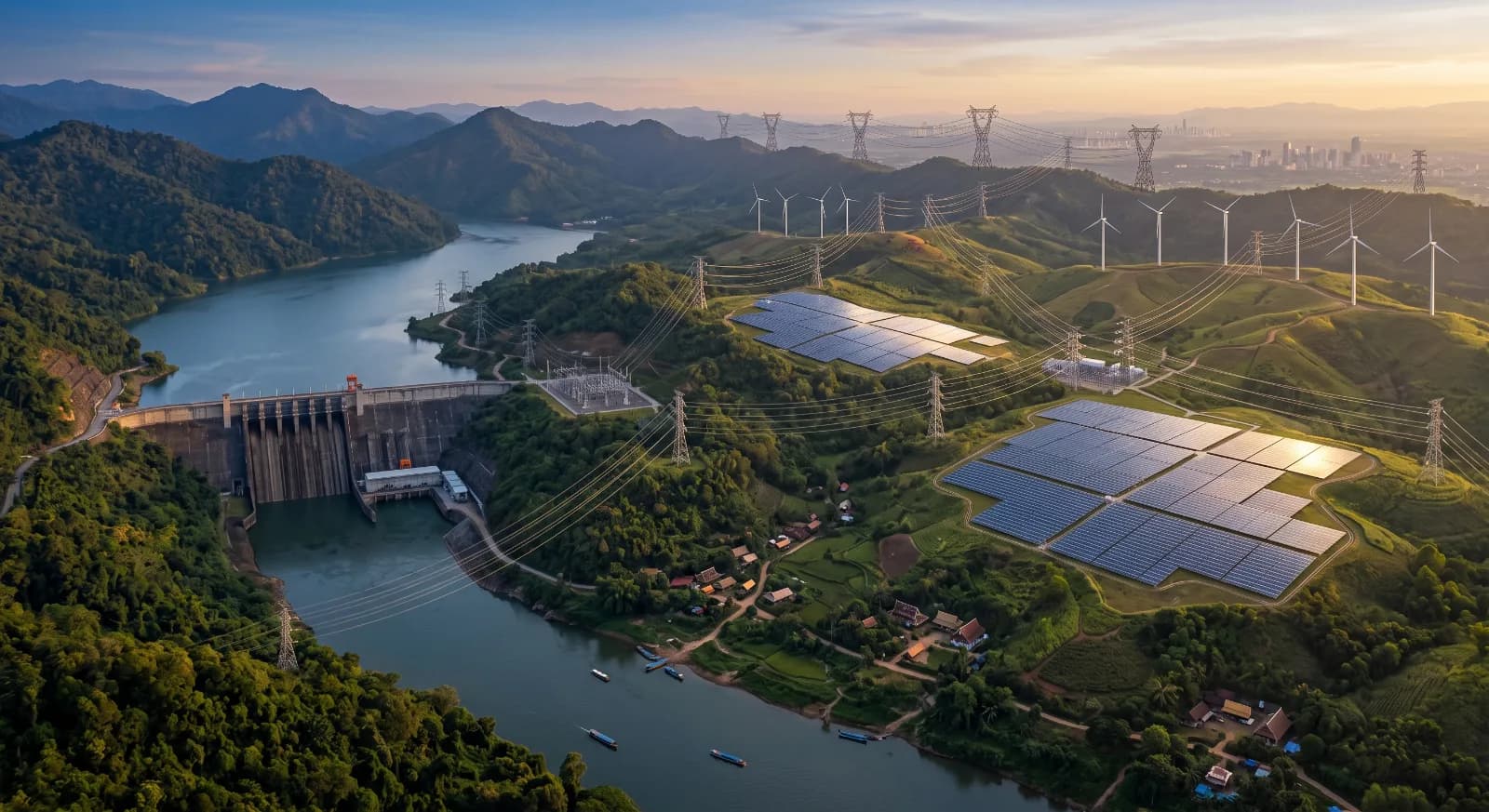
A denser alternative to pumped hydro storage hits a scaling problem
A British company has proven its dense-fluid pumped hydro storage system works, but the minerals it needs make longer-duration storage impractical at scale.
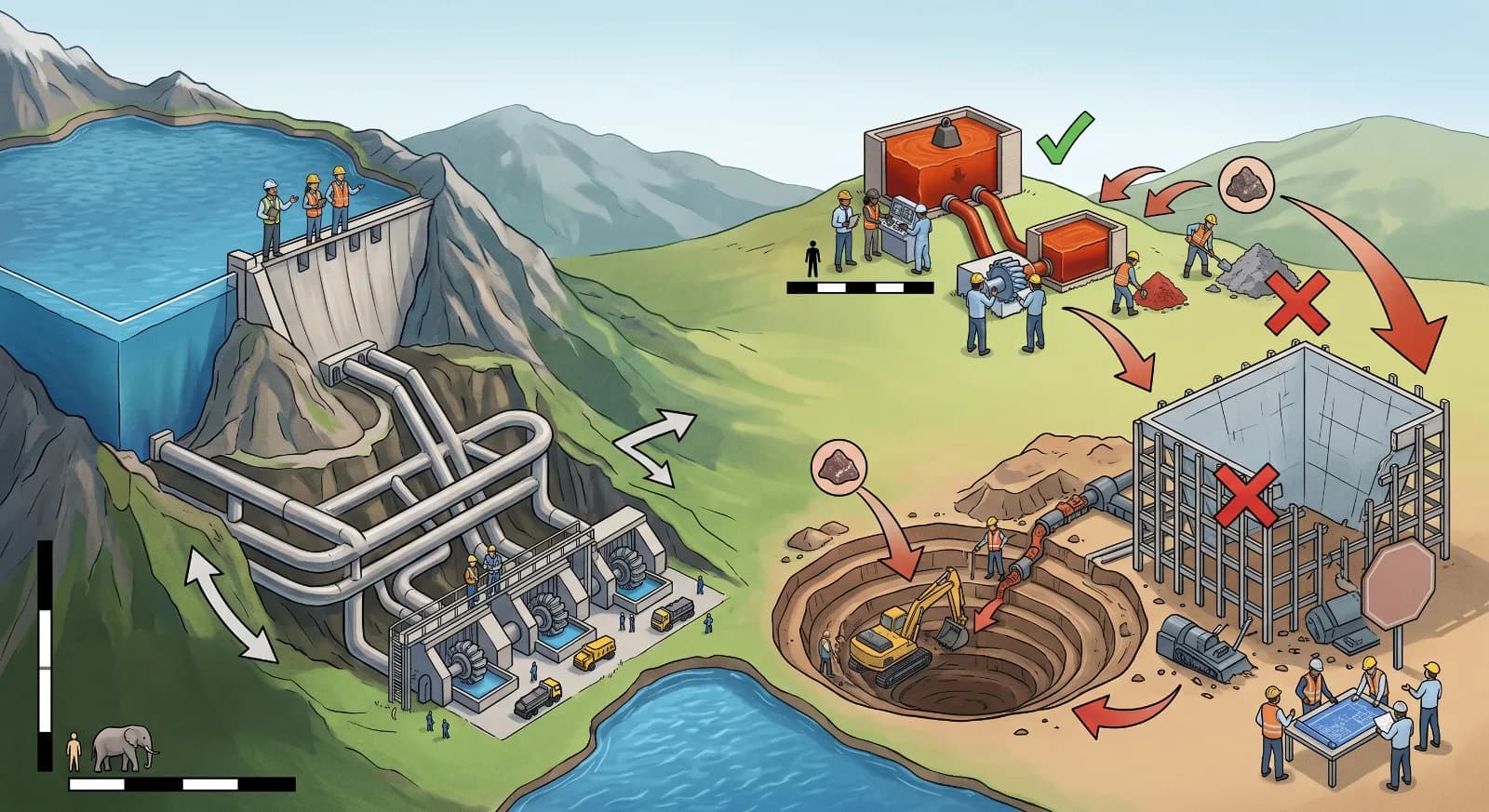
British company RheEnergise has proven that its "dense-fluid" pumped hydro system works, successfully demonstrating the technology at a test site in Cornwood, England — but scaling it up commercially may be much harder. The system uses a fluid roughly 2.5 times denser than water, which lets it store energy using smaller reservoirs or less elevation than conventional pumped hydro. That density comes from dissolved minerals, and the amount needed grows directly with how long the system needs to store energy.
A 600-megawatt system storing power for 18 hours would need about 8.8 million tonnes of barite, the mineral used in the fluid — roughly equal to current global annual production of the mineral. That makes longer-duration storage impractical, and the technology also faces competition from lithium-ion batteries, now around $70 per kilowatt-hour, for shorter four-to-eight-hour storage, while conventional pumped hydro using ordinary water remains cheaper for very long durations.
The Cornwood demonstration only managed 15 minutes of storage instead of the planned four hours, due to difficulty producing the dense fluid, and achieved 59% round-trip efficiency rather than the targeted 80%. Analysts say the technology likely has a niche future, at mining or quarry sites with cheap access to leftover mineral waste, rather than broad use.
Based on reporting by Michael Barnard for CleanTechnica. Read the original: https://cleantechnica.com/2026/09/12/dense-fluid-pumped-hydro-duration-scaling/
This article was produced with the assistance of AI tools and reviewed by an editor before publication.