Hydrogen-powered passenger flight remains a long shot for 2050, new analysis finds
A detailed feasibility model finds hydrogen-powered passenger flight has less than a 1% chance of reaching meaningful scale by 2050.
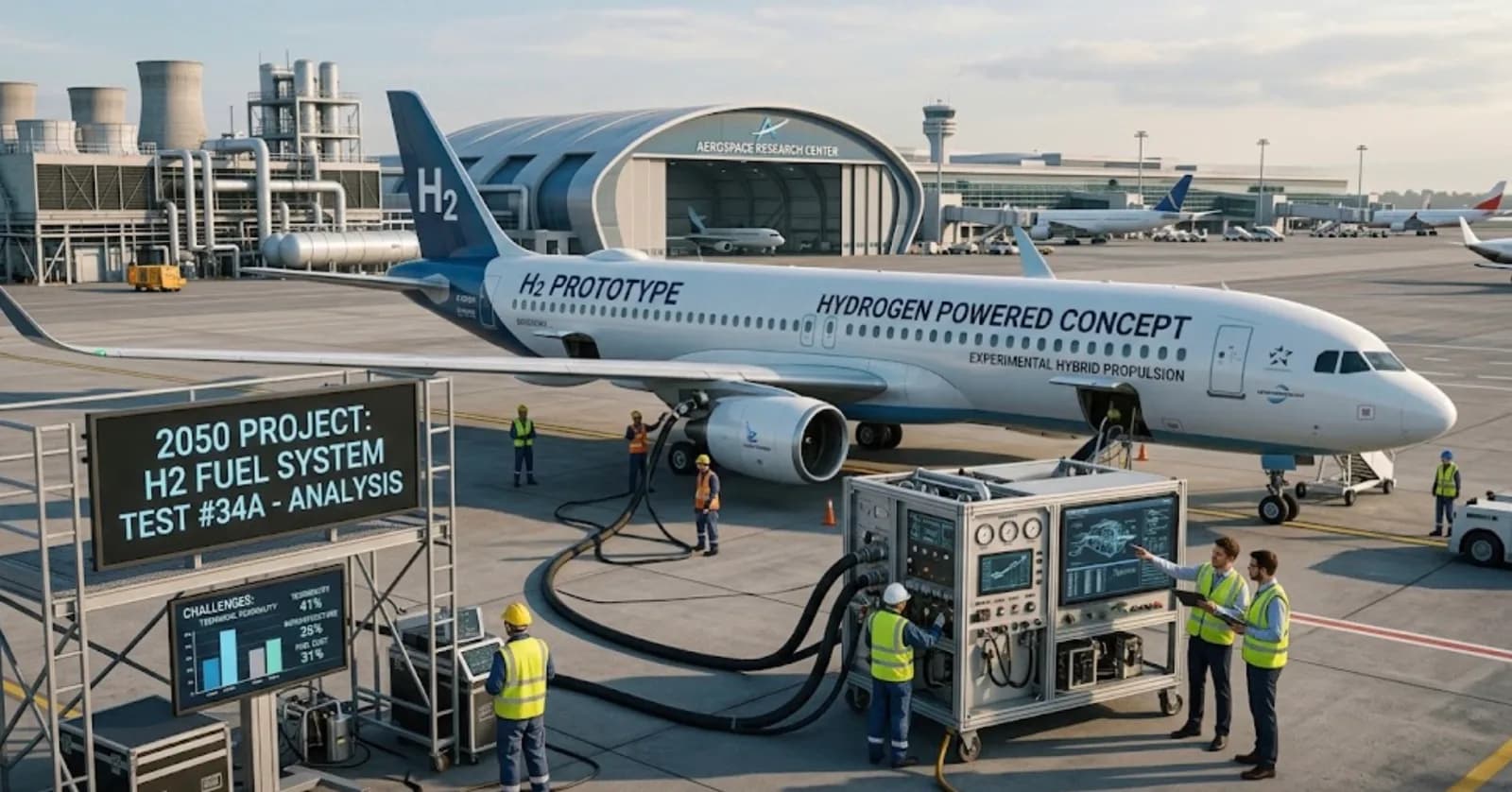
A detailed engineering analysis of the United Kingdom's push to develop hydrogen-powered commercial aviation concludes that the technology has less than a 1% chance of achieving meaningful scheduled service by 2050. Analyst Michael Barnard modeled a standard 150-passenger aircraft flying a 2,500-kilometer route and identified three requirements that must all succeed in sequence: an operator-ready hydrogen aircraft, an airport fuel network capable of supplying it at scale, and a fleet large enough to matter commercially.
Even under favorable assumptions, he found an operator-ready hydrogen aircraft reaches only about a 3% probability of existing by 2050. Once the added requirements of airport infrastructure and fleet-scale deployment are factored in, the probability of the complete system succeeding falls well below 1%.
The analysis notes that hydrogen aviation faces a steeper path than sustainable aviation fuels, which can be used in existing turbine aircraft without requiring new infrastructure, whereas hydrogen would require replacing large parts of both the aircraft and airport fuel systems simultaneously. The report concludes that even a breakthrough in cheap hydrogen production would not be enough on its own to make an incomplete aircraft-and-airport system commercially viable.
Based on reporting by Michael Barnard for CleanTechnica. Read the original: https://cleantechnica.com/2026/09/15/hydrogen-passenger-aviation-below-1-percent-2050/
This article was produced with the assistance of AI tools and reviewed by an editor before publication.