Lithuania moves to boost rooftop solar as it aims to become a power exporter by 2028
Lithuania's Energy Ministry has approved new measures to expand residential solar, including clearing rules that blocked panels on apartment balconies, as the country tries to turn its solar boom into an export business.
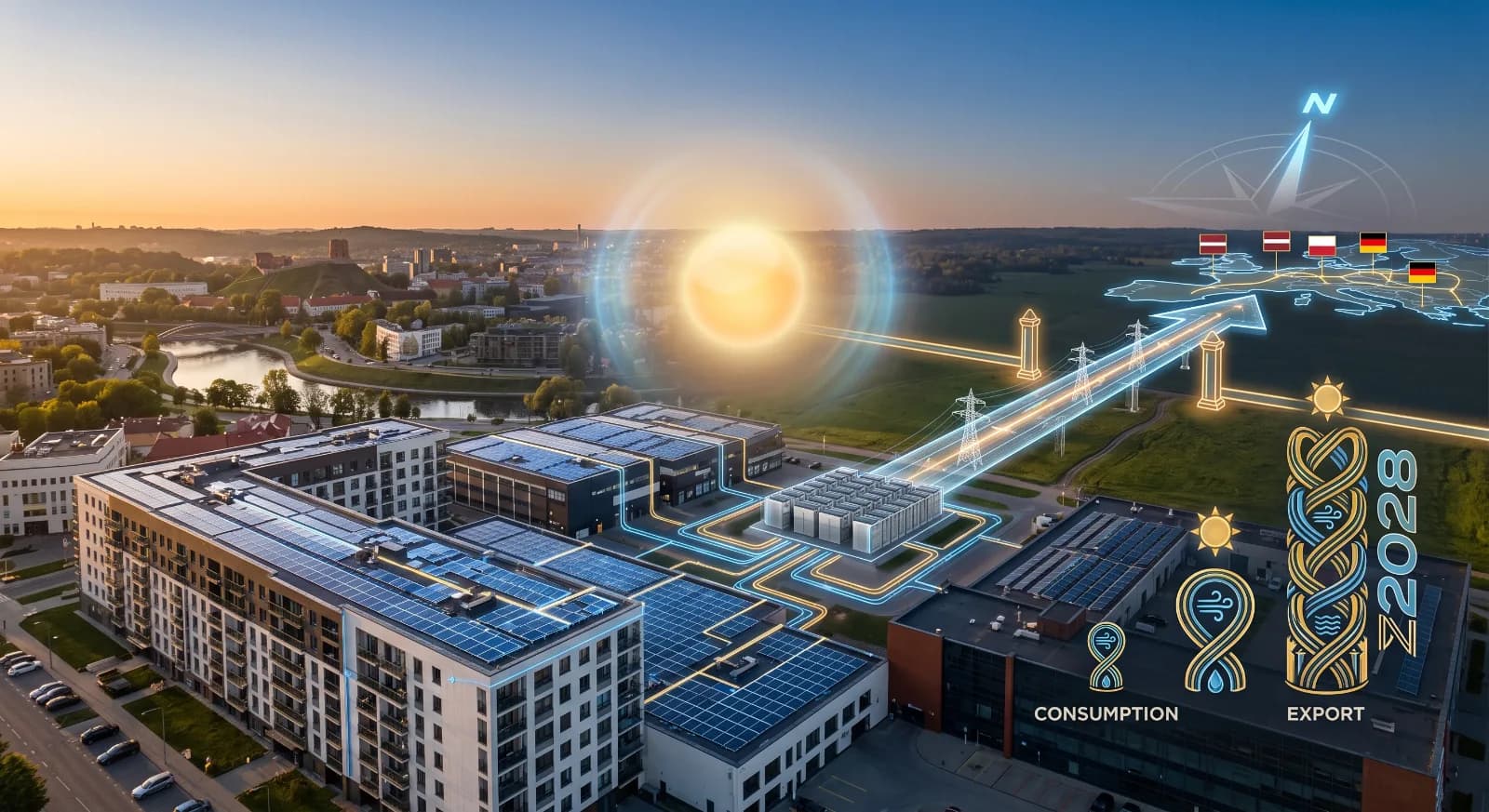
Lithuania's solar capacity topped 3 gigawatts by the end of 2025 after adding about 600 megawatts that year, and solar supplied 44.7% of the country's electricity demand in June 2026, the second-highest share in the European Union after Latvia. The country's Ministry of Energy has now approved measures to remove regulatory obstacles to solar panels on apartment balconies and to support energy communities.
The government is also coordinating support for solar plants and storage systems, continuing subsidies for heat pump replacements, modernizing district heating systems, and planning thousands of kilometers of new cable power lines, along with more favorable network charges for storage. Energy Minister Lukas Savickas said the goal is to deliver "more stable prices and more reliable supply" for residents, "faster investments and lower energy costs" for businesses, and "more local energy and more resilient infrastructure" for the state.
In 2025, Lithuania spent 100 euros on imported electricity for every 2 euros it earned from electricity exports. The government's stated goal is to reach at least 20 euros in export revenue for every 100 euros of imports by 2028, as it works to turn the country from a net electricity importer into an exporter.
Based on reporting by Patrick Jowett for PV Magazine. Read the original: https://www.pv-magazine.com/2026/09/15/lithuania-moves-to-support-residential-pv/
This article was produced with the assistance of AI tools and reviewed by an editor before publication.