Renewable Energy Surplus in Brazil Sparks Unregulated Data Center Boom in Rural Areas
Companies seeking to harness energy wasted due to transmission constraints in wind and solar are building facilities on Quilombola lands in Bahia, causing environmental and noise problems.
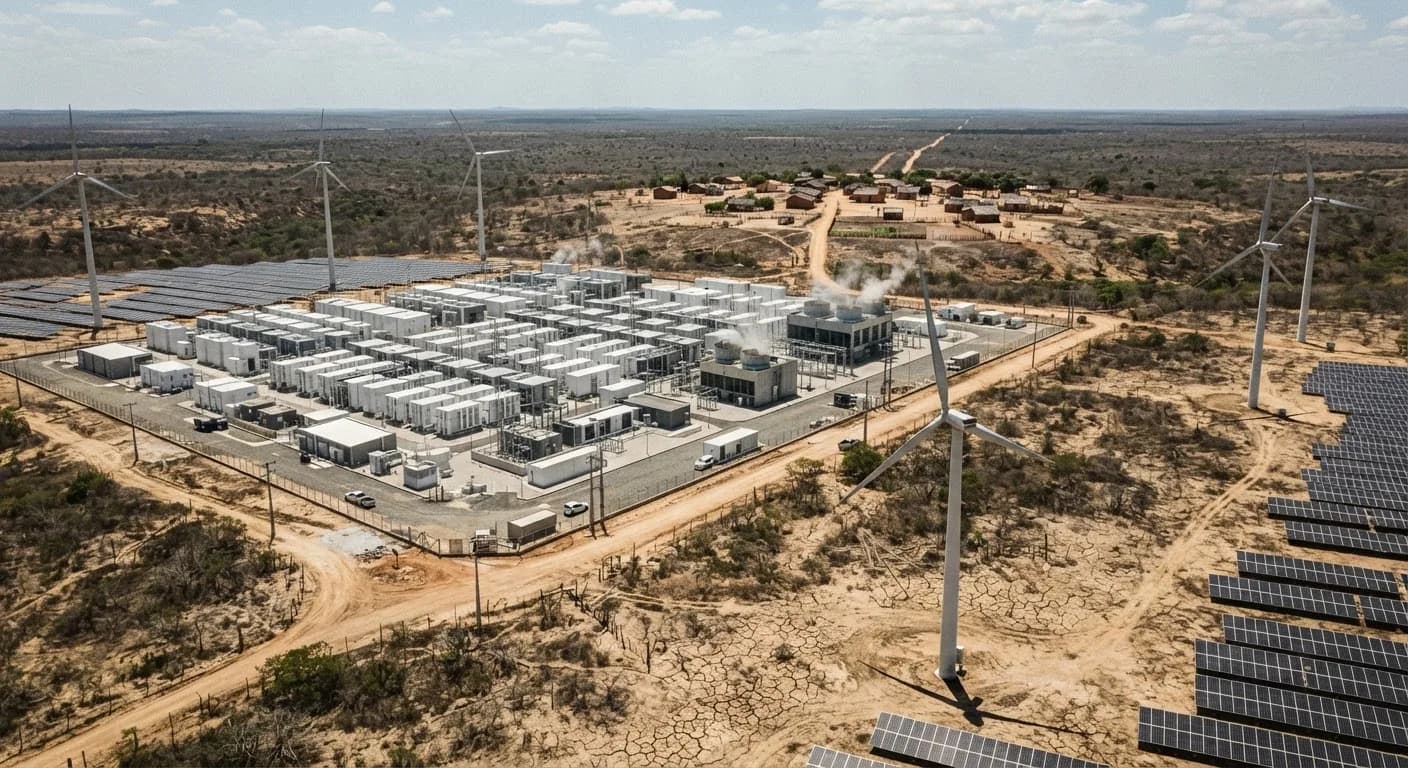
Brazil's renewable energy boom in the northeast is pushing energy companies down an unusual path: unable to feed the electricity they generate into the grid, they are building massive data centers to consume that energy on site. But the noise pollution caused by these "co-located" facilities is threatening the rights of traditional Quilombola communities in the region and igniting an unprecedented environmental debate in Brazil.
According to data from the National System Operator (ONS), curtailment in wind and solar generation in Brazil hit a record 20.7% of potential output in 2025. This figure reveals that the biggest bottleneck in the country's clean energy infrastructure is no longer generation but transmission. Every megawatt-hour of electricity that cannot be connected to the grid means a direct financial loss for companies. According to a calculation by energy trading association Abraceel, the sector lost 3.2 billion reais (about $612 million) in just the first six months of 2025.
This massive cost has pushed companies toward creative solutions. The most direct way to prevent surplus energy from going to waste was to bring consumption right next to production. Data centers, whose demand is booming globally, became a perfect fit for this energy surplus. While global tech giants wait in line for grid access, energy companies in Brazil have found themselves almost searching for customers. This reversed dynamic has led to new facilities springing up like mushrooms, especially in the arid hinterlands of Bahia state, without any central planning or strict environmental oversight.
According to Mongabay, citing a report by The Intercept Brasil, 65% of data center connection requests in the country come from renewable energy companies. These companies are positioning their facilities right next to power plants to bypass grid constraints and gain a cost advantage through the "self-generation" model. This model, which turns energy surplus from a problem into an opportunity, paints a picture that is the exact opposite of the energy supply challenges faced by data centers in the United States and Europe.
But this rapid and unregulated growth comes at a cost. Facilities built in regions of Bahia's countryside inhabited by Quilombolas, descendants of Africans who escaped slavery, generate noise pollution that continues 24 hours a day. These areas, which function as a "green oasis" for energy companies, have turned into an industrial occupation that makes life difficult for local residents. This tension has also resonated in the Brazilian Senate. Bill 3018/2024, which aims to set energy efficiency, noise limits, and environmental standards for data centers, is currently under consideration in the Senate. However, whether the bill will become law and how effective it will be in practice remains uncertain.
Türkiye is also moving toward a similar crossroads. With a wind power installed capacity of around 13 GW, Türkiye occasionally experiences grid constraints similar to Brazil's, and generation forecasting and curtailment management are carried out through TEİAŞ's RİTM system. Combined with Türkiye's goal of becoming a regional data center hub, energy-intensive facilities that could be built near wind farms, particularly in the Aegean and Marmara regions, could bring the land use and environmental justice debates seen in Brazil to Türkiye as well. The Brazilian example shows that transmission bottlenecks in renewable energy can be not just an infrastructure problem, but also a trigger for unplanned industrial expansion.
This article was produced with the assistance of AI tools and reviewed by an editor before publication.