A mining boom is closing in on the world's rarest great ape
A Mongabay investigation finds gold mine expansion, cyclone damage, and rising fire risk squeezing the last stronghold of the Tapanuli orangutan, with no coordinated recovery plan in place.
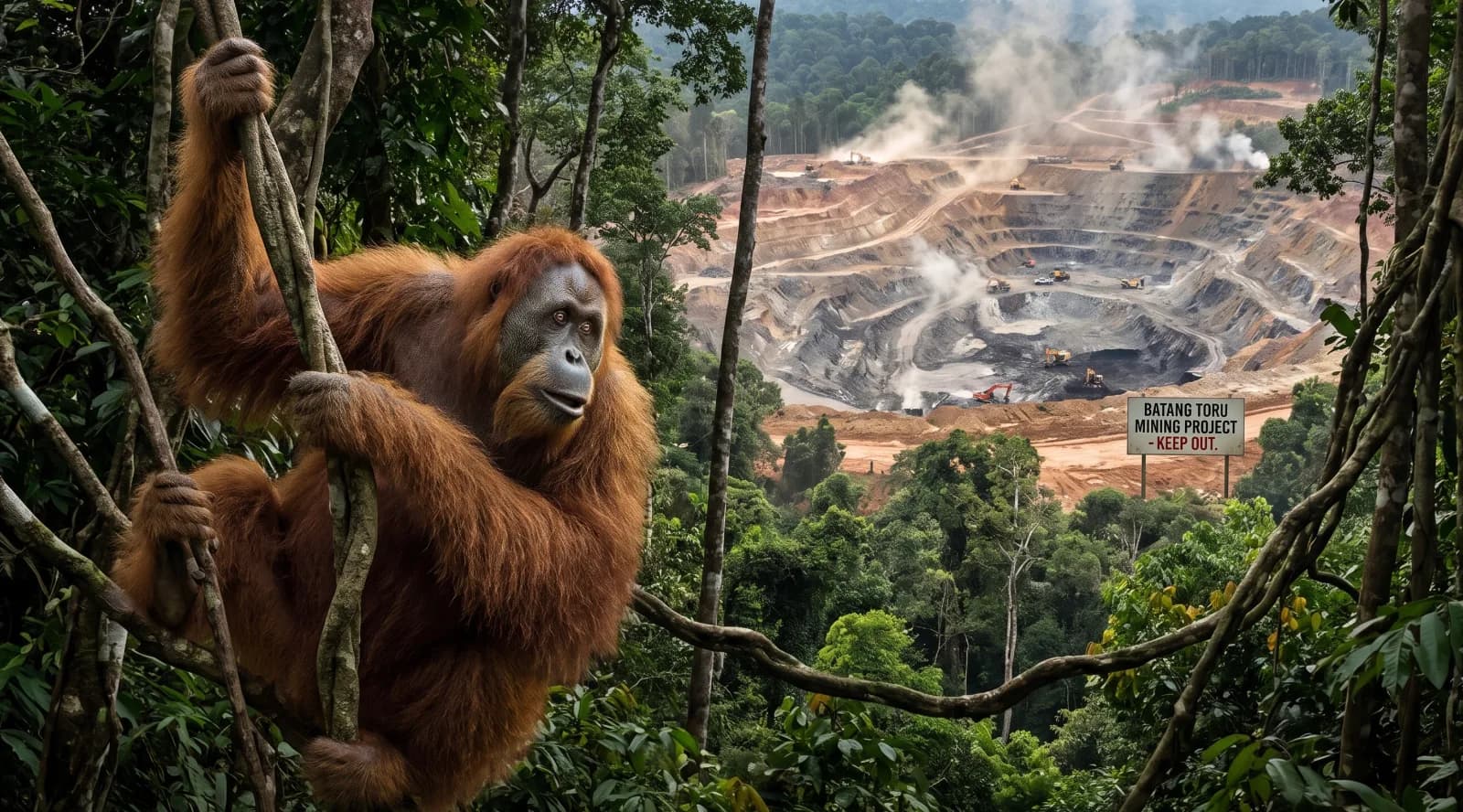
According to a report published Friday by Hans Nicholas Jong on Mongabay, only about 716 Tapanuli orangutans remain in North Sumatra's Batang Toru ecosystem, split across three fragmented populations, making them the most endangered great ape species. A cyclone in November 2025 killed an estimated 58 of the apes and destroyed more than 8,300 hectares of forest, a mortality rate the report says exceeds acceptable thresholds roughly sevenfold.
The Martabe gold mine, run by Agincourt Resources, a subsidiary of the UK conglomerate Jardine Matheson, overlaps with core orangutan habitat. Satellite imagery from June 2026 showed unexplained ground disturbances near a proposed expansion of the mine's Tor Ulu Ala pit, and an environmental audit of the mine's impact on the species remains incomplete even as operations continue, researchers told Mongabay.
Conservationists warn that a strong El Nino phase now raises the risk of further fires in forest already weakened by the cyclone and mining activity, and that no coordinated recovery plan exists for the species. "The west block was the epicenter of the Tapanuli orangutan population, and now we don't actually really know what the population health is," one expert told Mongabay.
Hans Nicholas Jong, Mongabay: https://news.mongabay.com/2026/09/tapanuli-orangutans-face-mining-landslides-and-fire-threats-with-no-recovery-plan/
This article was produced with the assistance of AI tools and reviewed by an editor before publication.