DNA reveals five new freshwater mussel species hiding in rivers of the southern United States
The mussels looked like known species, and researchers say several are rare enough to need protection, though only one has been proposed for federal listing.
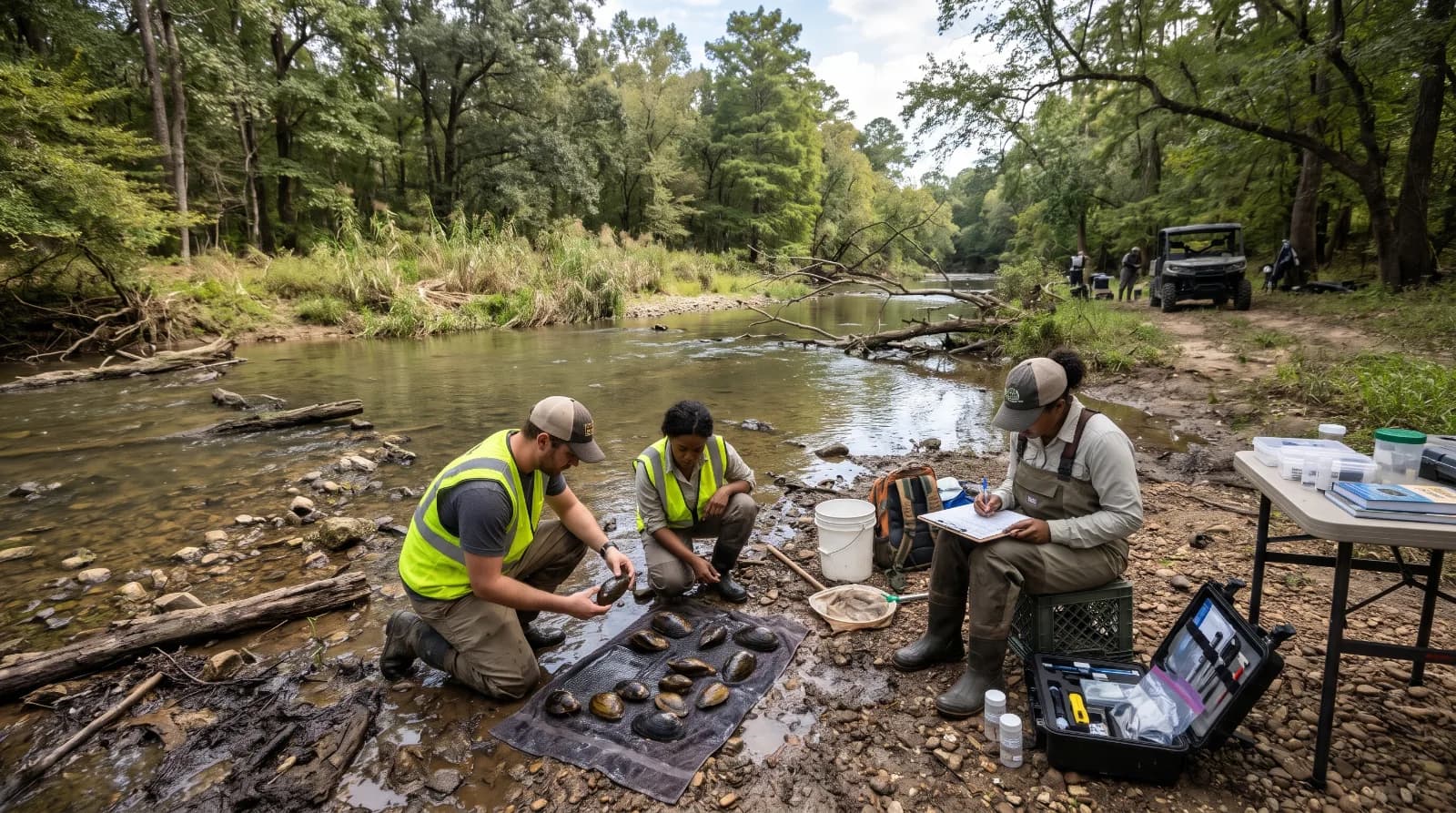
Researchers have described five freshwater mussel species new to science from rivers in Missouri, Arkansas, Mississippi, Alabama, Louisiana and Texas, after DNA showed that shells resembling familiar species belonged to distinct lineages.
The finding matters because freshwater mussels filter and clean river water but are the most imperiled group of animals in North America, according to the U.S. Geological Survey (USGS). About 66% of the continent's freshwater mussel species are at risk.
Scientists from Shedd Aquarium, Arkansas State University and the USGS spent 20 years snorkeling through southern rivers, often taking a tissue sample or swab before returning mussels alive, according to a piece published Tuesday by Liz Kimbrough in Mongabay. The study, published in the journal Zootaxa, found that each major river basin held its own genetic lineage.
All five belong to the hickorynut group. The Tallahatta hickorynut is known only from a roughly 10-mile stretch of Mississippi's Big Black River, while the Big Thicket hickorynut survives in a few scattered spots in Louisiana and Texas.
Only the Acolapissa hickorynut has been proposed for federal protection, and the authors are calling for state and federal reviews of all five. "Conservation efforts can only protect what we recognize," said lead author Kentaro Inoue, a research biologist at Shedd Aquarium.
Dams, silt, pollution and invasive zebra mussels threaten the animals, which can live 100 years or more and whose larvae depend on host fish.
This brief is based on reporting by Liz Kimbrough, published Oct. 27, 2026, in Mongabay. Read the original: https://news.mongabay.com/2026/10/five-new-mussel-species-reveal-how-much-biodiversity-us-rivers-still-conceal/
This article was produced with the assistance of AI tools and reviewed by an editor before publication.