Electric fences are killing Kenya's last giant pangolins faster than poachers can
Fewer than 30 giant ground pangolins remain in Kenya, and most of the recent deaths have come from electrocution on farm fences, not trafficking, pushing Maasai communities to start deactivating the fences' lower wires.
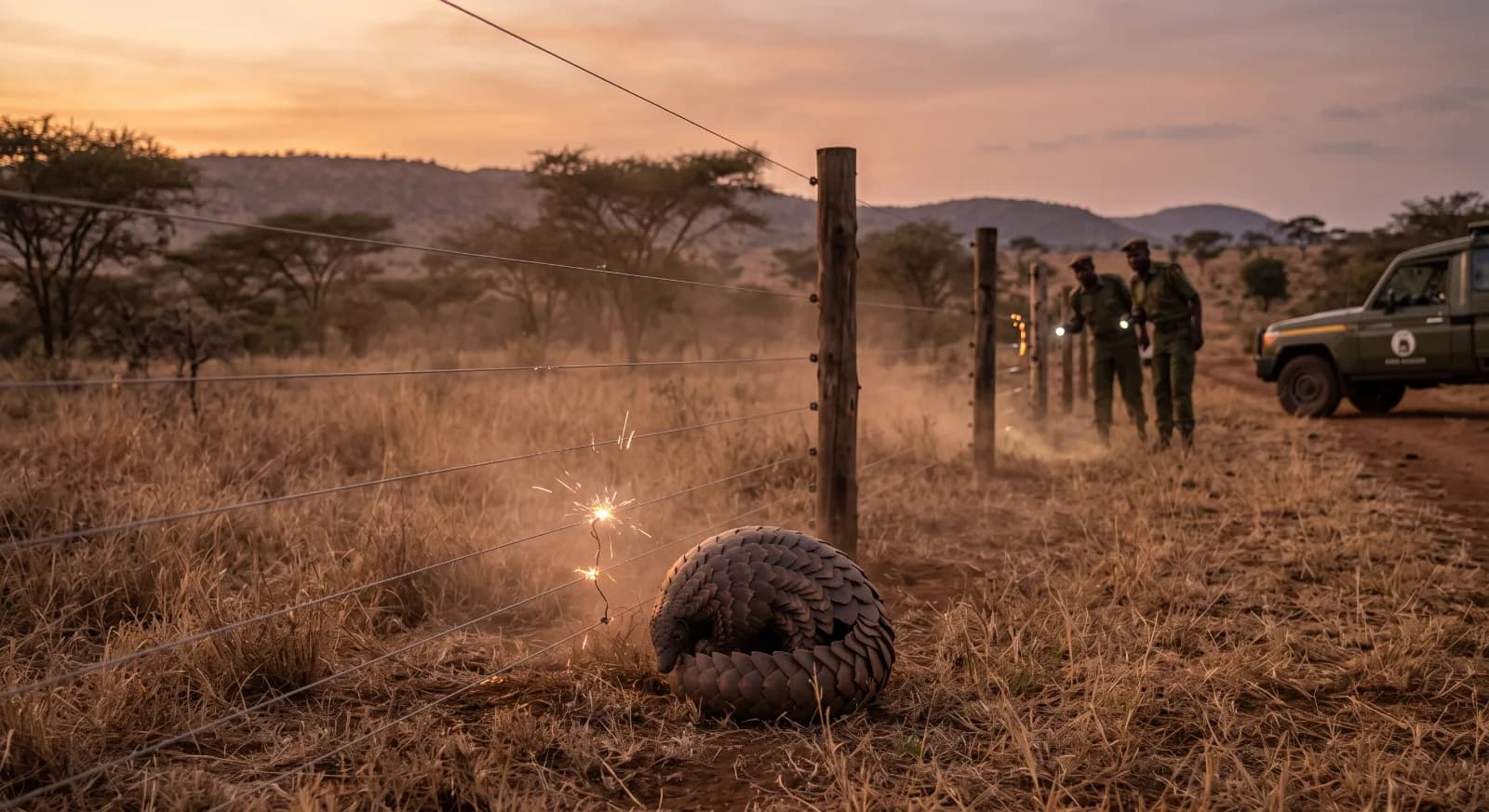
Fewer than 30 giant ground pangolins are believed to remain in Kenya, all in the Nyekweri Forest area, where electric fences built to protect farms from wildlife have become the animals' biggest threat. Of 15 giant ground pangolins found dead near the forest since 2022, 14 died from contact with electric fencing. "Right now, these fences are killing pangolins faster than traffickers are taking them," said Michael Koskei of the Pangolin Project.
More than 80% of Nyekweri Forest has been cleared in the past 20 years for crops and livestock, and roughly 268 kilometers of electrified fencing now cross the landscape. Community leader Peter Ole Tompoy said witnessing a pangolin's death changed his view of the fences: "Seeing that made me realize what these fences were doing to pangolins."
Conservationists and Maasai landowners have deactivated the lower strands on about 134 kilometers of fencing, half of all mapped electric fencing in the area, to let pangolins and other small animals pass safely, and more than 6,000 hectares of private land have been placed under conservation easements. "Without protecting what remains of the forest, there will be nowhere left for pangolins to feed," said Beryl Makori, a chief program officer involved in the effort. A single pangolin eats an estimated 70 million ants and termites a year, making it an important check on insect populations.
Based on reporting by Pauline Kairu for Mongabay. Read the original: https://news.mongabay.com/2026/09/electric-fences-that-kill-and-the-maasai-trying-to-save-kenyas-last-giant-pangolins/
This article was produced with the assistance of AI tools and reviewed by an editor before publication.