Endangered Irrawaddy dolphins show signs of a cautious comeback in the Mekong
Six new calves born this year lifted Cambodia's critically endangered Irrawaddy dolphin population to 118, a rare bright spot after decades of decline driven mainly by illegal fishing gear.
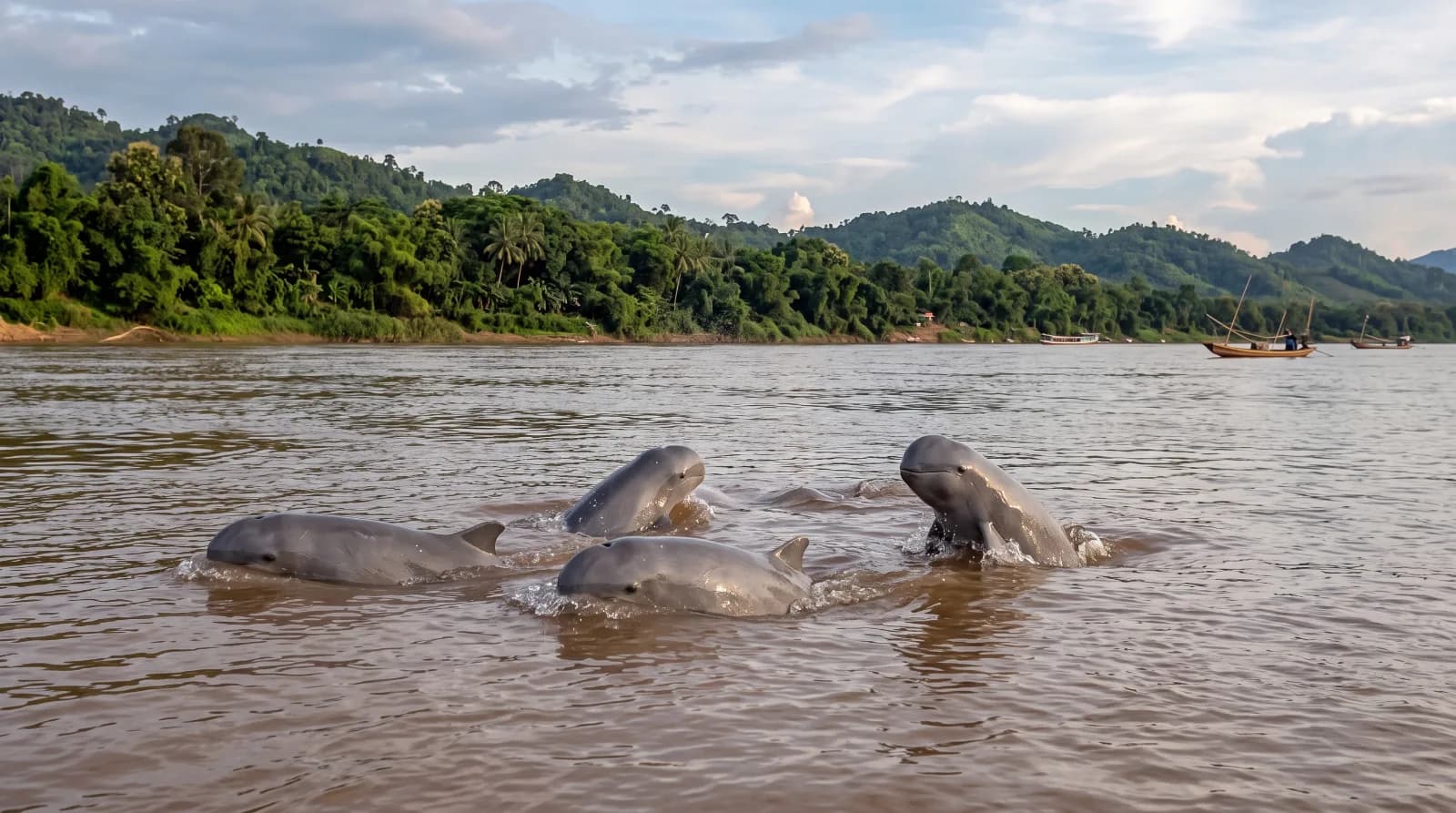
According to a piece published Thursday by Eung Sea on Mongabay, six Irrawaddy dolphin calves were born in Cambodia's stretch of the Mekong River in 2026, lifting the critically endangered population to 118 individuals. That is still a fraction of the roughly 200 dolphins that lived in the river in the late 1990s, but conservationists say the births are an encouraging sign after years of decline driven by illegal gillnets, electrofishing, and habitat degradation from upstream dams.
The species' vulnerability varies sharply by location: the Anlong Chheu Teal pool, once home to dolphins, lost its last individual in 2022, a loss that also devastated local ecotourism revenue tied to dolphin-watching. Mongabay reports that entanglement in illegally set gillnets and long-line hooks, rather than deliberate poaching, remains the dolphins' main cause of death.
Conservation efforts now center on a roughly 180-kilometer stretch of protected habitat in Cambodia, where riverguard patrols run in partnership between the country's Fisheries Administration and WWF-Cambodia remove illegal nets and monitor the remaining pods. Researchers caution that with the population still critically small and concentrated in a handful of deep-water pools, continued funding for patrols will be essential to keep the recent gains from reversing.
Eung Sea, Mongabay: https://news.mongabay.com/2026/09/mekongs-irrawaddy-dolphins-find-cautious-hope-amid-a-river-in-crisis/
This article was produced with the assistance of AI tools and reviewed by an editor before publication.