COP31 Antalya: What is on the agenda, when the leaders meet
Türkiye's COP31 Presidency has finalised the thematic day programme for the November 2026 climate conference - and the running order hints at how the host wants to frame the global agenda.
At the United Nations Climate Change Conference (COP31), to be held at the Antalya EXPO Center from November 9-20, 2026, heads of state and government will meet on the third and fourth days of the conference, unlike in previous years. According to information on the official program page of the COP31 Presidency, the World Leaders Climate Action Summit will be held on November 11-12 under the patronage of President Recep Tayyip Erdoğan.
The date and location of the conference are also stated on the UNFCCC's own website; the Ministry of Environment, Urbanization and Climate Change also confirms the same schedule. However, the date of the leaders' summit is currently based solely on the Presidency's own announcement.
The Presidency announced that each of the twelve days of the conference is dedicated to a climate action priority area, and that the thematic day program has been finalized.
Two central themes at the heart of the agenda
The COP31 Action Agenda announced by the Presidency is based on ten priority themes: zero waste, oceans and seas, food security, climate-resilient cities, finance and institutional structures empowering climate action, youth and education, green industrialization, clean energy transition, Rio synergies, and resilient health systems. Finance, technology, and capacity building are not separate themes but are defined as horizontal empowering elements across all themes.
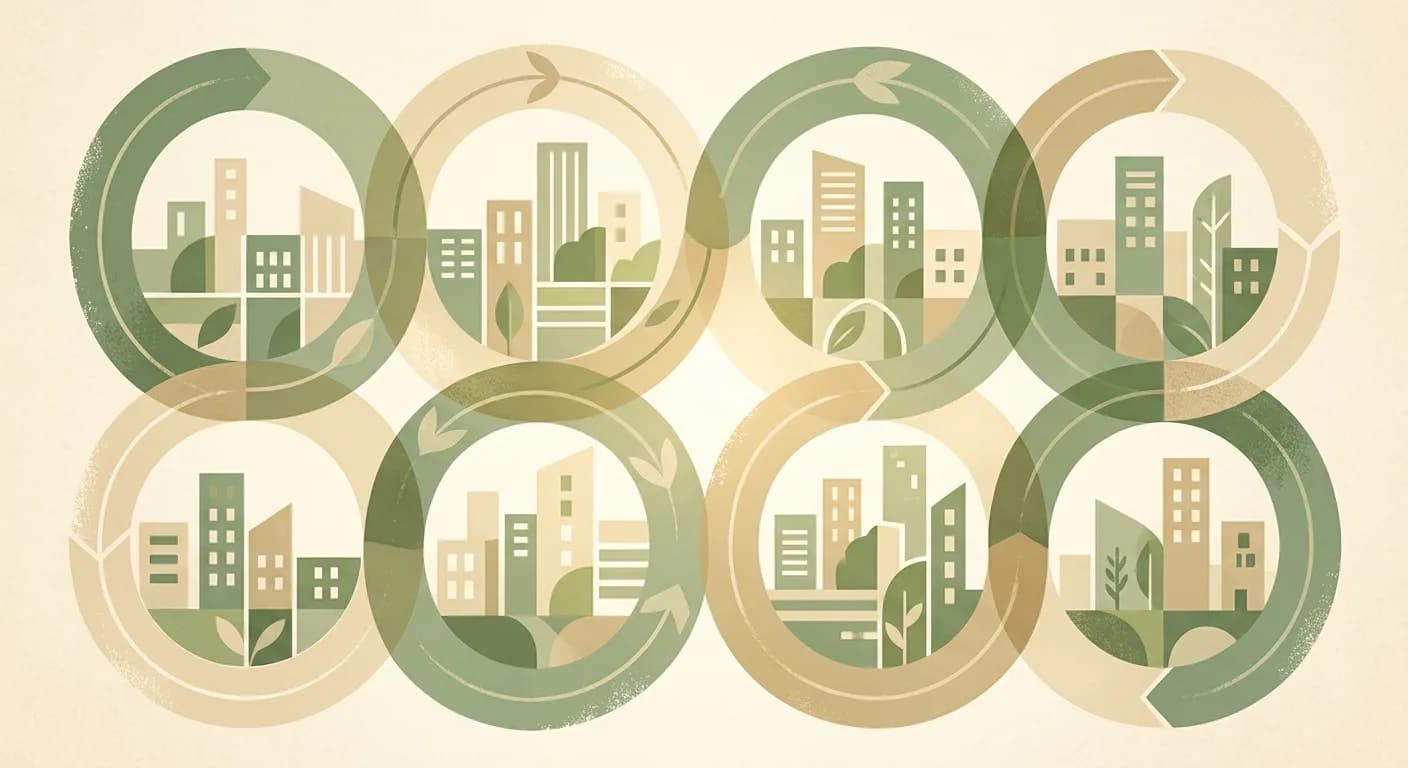
The leaders' summit program will include roundtable sessions on resilient cities, climate finance, decarbonization, circular economy, and blue climate action. According to the Presidency's announcement, special programs highlighting the zero-waste movement and circular economy solutions, spearheaded by Emine Erdoğan, will also be held within the scope of the summit.
Turkey's Presidency announced three global numerical targets at the UN June Climate Meetings in Bonn on June 9, 2026: increasing the share of electricity in final energy consumption to 35 percent by 2035, reducing the projected global increase in urban solid waste by at least 50 percent by 2035, and reducing energy intensity in the building sector by at least 25 percent by the same date.
Structure inherited from Belém
The Action Agenda was not designed from scratch. According to the Presidency's statement, the structure was built upon the six thematic axes established by Brazil's COP30 Presidency in Belém; Action Agenda Director Tuğba Dinçbaş described this choice as a response to "a real need from an implementation perspective." The claim of continuity is also confirmed by the UNFCCC.
The institutional picture is as follows: Türkiye holds the COP31 Presidency, and Australia holds the negotiating chairmanship. According to the Climate Change Presidency's statement, Minister of Environment, Urbanization and Climate Change Murat Kurum is the COP31 Chair, and Samed Ağırbaş, President of the Zero Waste Foundation, is the COP31 High-Level Climate Champion.
The Australian Department of Agriculture, Fisheries and Forestry announced that it will showcase climate-sensitive agricultural practices at COP31's food, agriculture and water themed day. According to the same announcement, Fiji will host pre-COP meetings from October 5-8, 2026, and Tuvalu will host a leaders' level event.
What does this mean for Türkiye?
Zero waste has become a signature theme for Türkiye since 2017, and the Zero Waste Foundation is the institutional carrier of this agenda. The Zero Waste Forum 2026, organized by the Foundation at Istanbul Atatürk Airport from June 5-7, 2026, was held under the theme "The Road to Antalya: Zero Waste as Climate Action"; According to the organizers, there were over 120 ministers from 183 countries and more than 5,000 participants.
The second theme directly relates to Türkiye: the energy intensity of the building stock and post-earthquake reconstruction. According to the Presidency, cities are responsible for approximately 70 percent of global greenhouse gas emissions; Health Policy Watch reports that the building and construction sector is responsible for approximately 37 percent of global emissions and almost half of raw material extraction.
On the participation side, GlobalABC expects around 100,000 people. The Presidency is also running a volunteer program for 5,000 young people, including 1,500 from abroad — applications are now closed — and has established the COP-SCIENCE platform for academic contributions. Press accreditation is obtained through the UNFCCC's online registration system.
This article was produced with the assistance of AI tools and reviewed by an editor before publication.