Hurricane recovery is quietly pricing longtime residents out of Florida's coastal towns
Years after storms like Hurricane Michael and Hurricane Ian, Florida beach communities are seeing affordable housing replaced with expensive homes, with lower-income and minority residents the least likely to return.
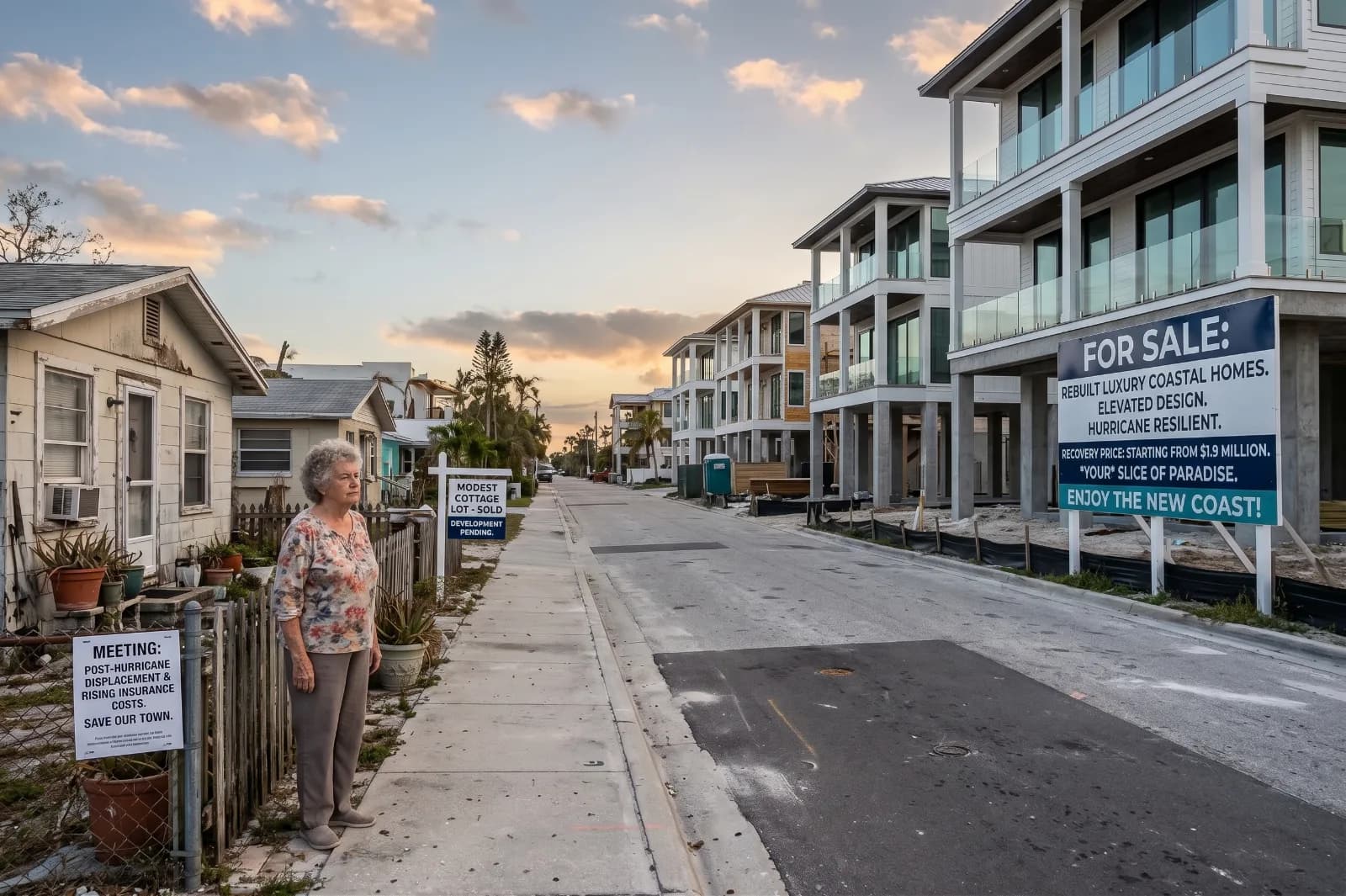
According to a piece published Saturday by Mike Schneider on Inside Climate News, Florida coastal communities hit by hurricanes such as Michael in 2018 and Ian in 2022 are experiencing what researchers call "post-disaster gentrification," in which affordable housing disappears and is replaced by expensive properties for wealthier newcomers. In Mexico Beach, median household income rose from $68,000 in 2017 to $100,000 in 2024, while the share of households earning more than $200,000 nearly quadrupled to 10.1%.
Census data cited in the report shows Black and Latino households, renters, lower-income families, people with disabilities, and other minority groups were significantly less likely to return after these storms, driven out by limited insurance payouts, hard-to-access assistance programs, and housing that had become unaffordable. In Bay County, homes priced under $300,000 fell from 70% of the market before Hurricane Michael to less than half afterward, while median home prices jumped from $220,000 to $310,500 between 2019 and 2024.
Stricter building codes adopted after the storms have driven up reconstruction costs, and rental markets have collapsed in some areas, pushing longtime residents like Bridget Fown to leave entirely, according to the report. The result, researchers say, is that working-class beach villages are being transformed into investment properties and vacation rentals for wealthier buyers.
Mike Schneider, Inside Climate News: https://insideclimatenews.org/news/19092026/florida-disaster-gentrification-following-hurricanes/
This article was produced with the assistance of AI tools and reviewed by an editor before publication.