Germany could face more than 600,000 metric tons of solar panel waste by 2030, study finds
Panels already installed hold materials worth €4.8 billion, but recycling plants are running well below capacity as fewer old modules than expected come back.
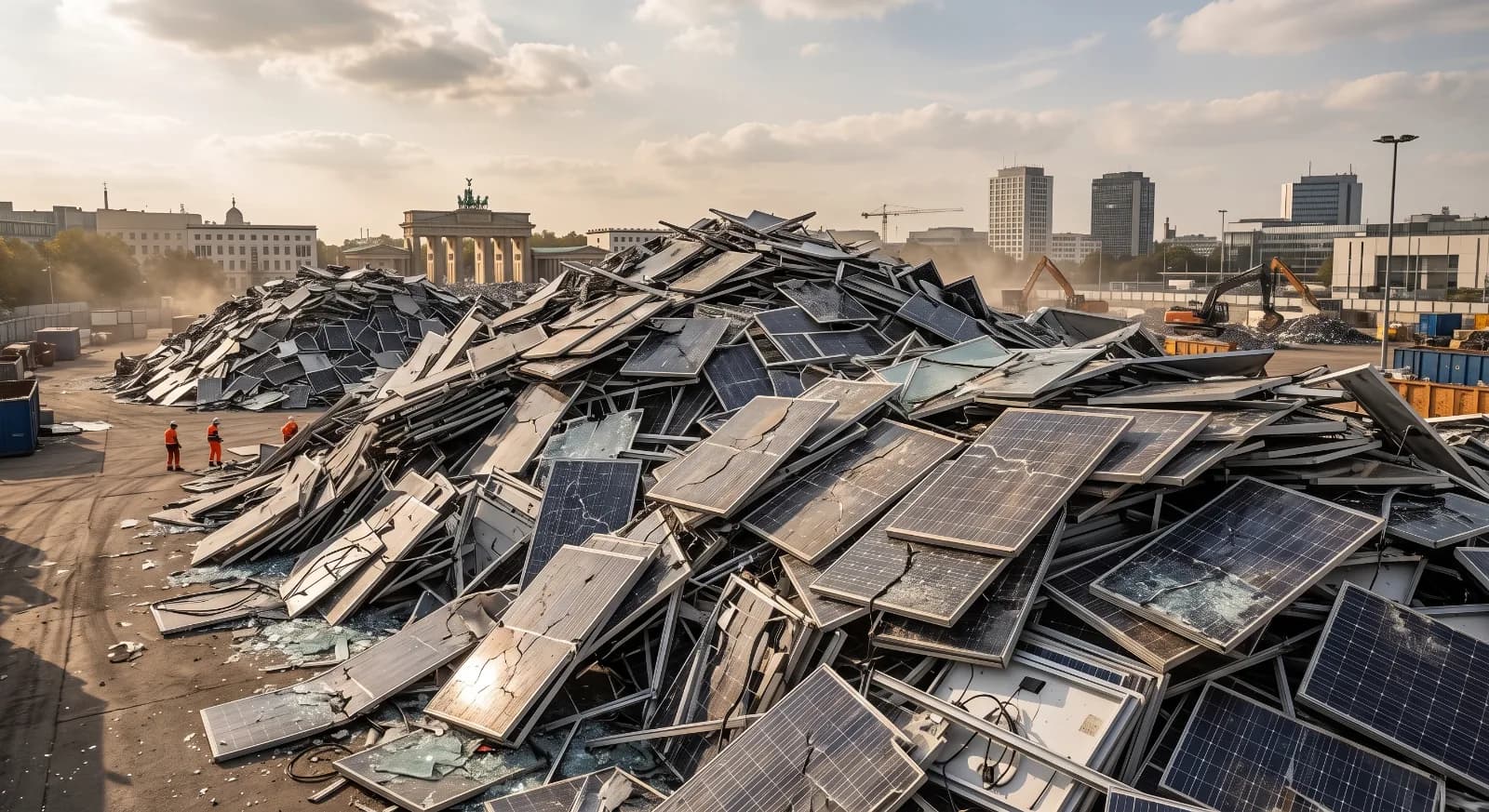
Germany could generate more than 600,000 metric tons of waste from solar panels by 2030, according to a study that also found the country's recycling plants are processing far fewer old panels than they can handle.
The study by the Fraunhofer Center for Silicon Photovoltaics, commissioned by the German Mineral Resources Agency, estimated that panels installed in Germany by the end of 2023 contained about 5.35 million tons of material, Petra Hannen reported Oct. 1 in pv magazine. That includes 3.85 million tons of glass, 663,000 tons of aluminum and 3,900 tons of silver, with a potential value of €4.8 billion.
Current recycling processes for crystalline silicon panels achieve an overall recovery rate of more than 95% and a material recycling rate of about 85%, though silicon itself is generally not recovered.
Return volumes are hard to predict. Recorded end-of-life panels fell between 2022 and 2024, contrary to expectations, possibly because used panels are being exported. In 2024, Germany had more than 50,000 tons of recycling capacity but processed only about 9,300 tons. Capacity is projected to reach 75,000 tons by the end of 2027.
The authors recommend tying further expansion to actual return volumes to avoid overcapacity, and estimate that 300,000 tons of annual capacity could be enough by 2040.
This brief is based on reporting by Petra Hannen, published Oct. 1, 2026, in pv magazine. Read the original: https://www.pv-magazine.com/2026/10/01/germany-could-generate-over-600000-tonnes-of-pv-module-waste-by-2030/
This article was produced with the assistance of AI tools and reviewed by an editor before publication.