Solar companies are racing to power the next generation of satellites
The space economy could reach $2 trillion by 2040, and suppliers are racing to build cheaper, more durable solar cells to power the satellites that will run on it.
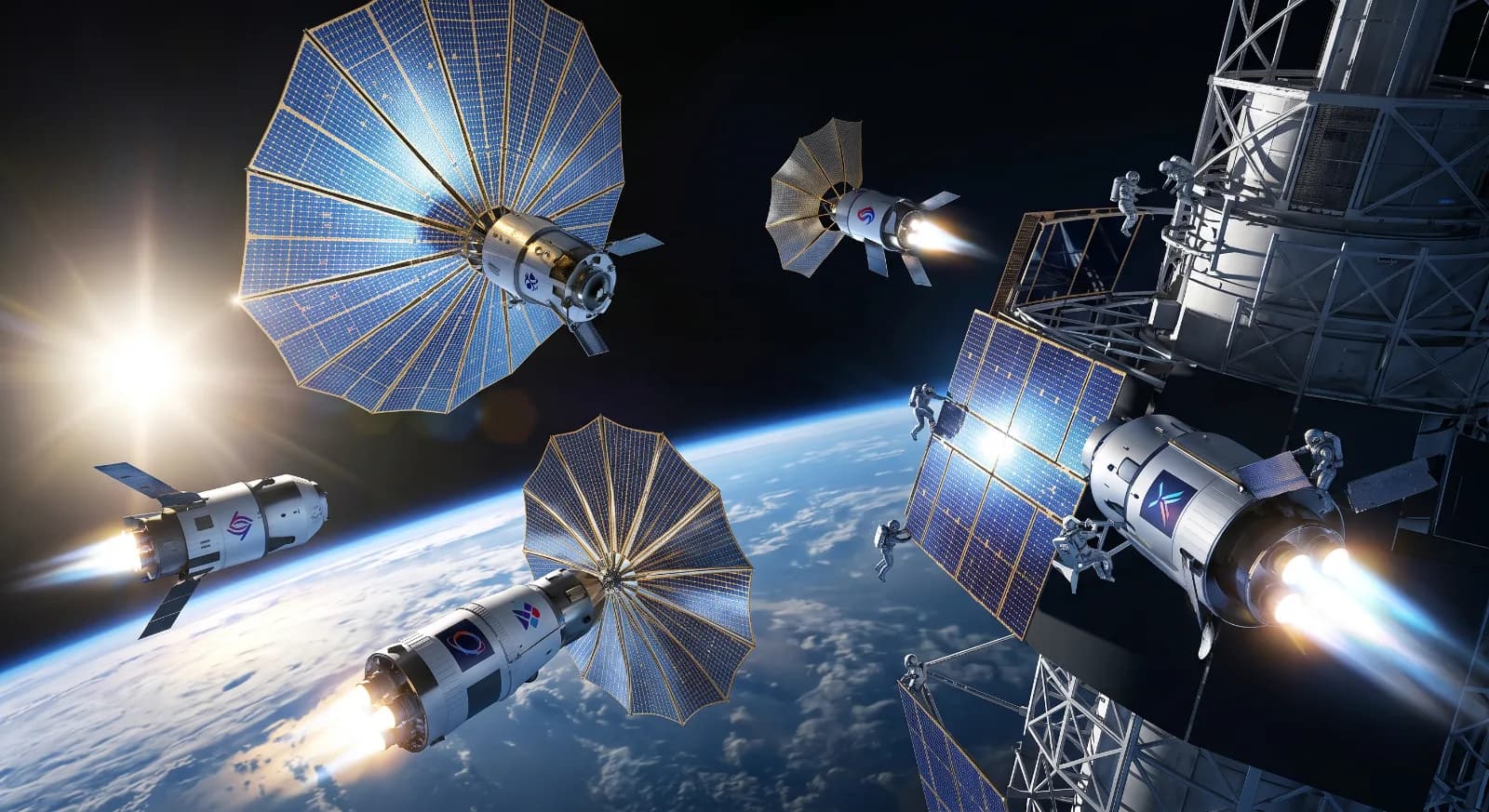
The space economy could reach $2 trillion by 2040, and solar power — the standard energy source for spacecraft for seven decades — is facing fresh competition among suppliers as demand grows. Traditional space-grade solar cells use gallium arsenide, which converts more than 30% of sunlight into electricity and withstands radiation well, but production is limited to under 5 megawatts a year with long lead times.
That's starting to change. York Space Systems, which raised $4.75 billion in a January initial public offering, paid $67 million to acquire Solestial, a company developing thinner, cheaper silicon-based cells as an alternative to gallium arsenide. The growth of low-orbit satellite constellations like Starlink, which face less radiation and have shorter lifespans than deep-space missions, is also making standard silicon cells more viable, especially as launch costs fall to roughly $2,000 per kilogram.
Perovskite solar cells are drawing interest too, with companies including Swift Solar and Oxford PV pursuing efficiencies above 30% at a fraction of gallium arsenide's cost, though their long-term durability in orbit is still unproven. The US Department of Energy has opened a $12 million grant program to support American space-solar manufacturing, with applications open through Oct. 8.
Based on reporting by Pepijn Veling for PV Magazine. Read the original: https://www.pv-magazine.com/2026/09/12/the-race-for-space-solar/
This article was produced with the assistance of AI tools and reviewed by an editor before publication.