Burnt coconut bait leads scientists to a new mouse species in Sri Lanka
Scientists have formally described a new mouse species in Sri Lanka's Knuckles Mountain Range, more than two decades after burnt coconut bait first lured it into a trap.
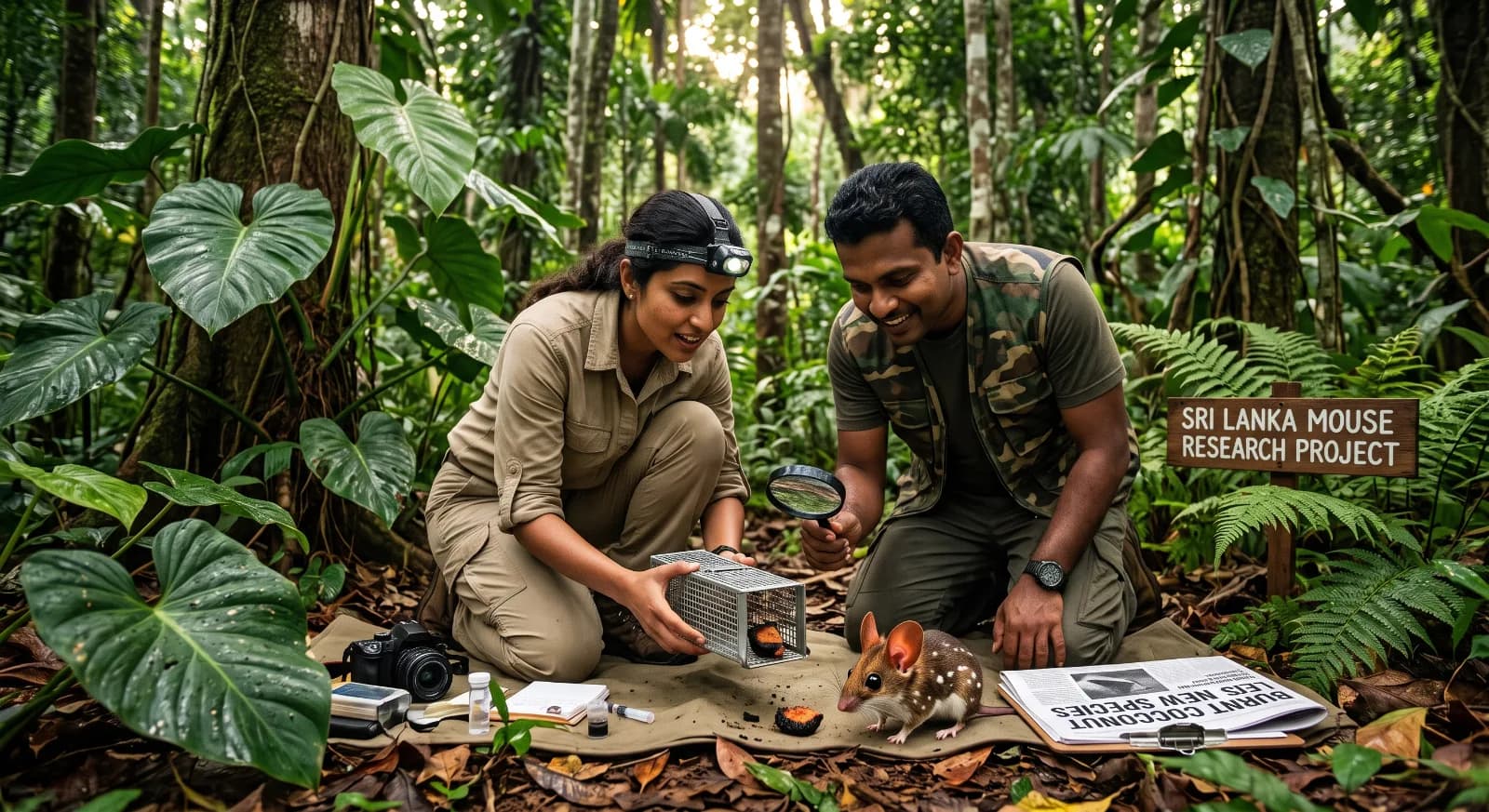
Researchers have formally described a previously unknown rodent species, Mus dumbara, named after the Dumbara valley in Sri Lanka's Knuckles Mountain Range where it was first caught in 2004. Scientists trapping mice near Puwakpitiya village found that burnt coconut worked better as bait than the peanut butter typically used, and it lured in two mice with an unusual elongated tail and fulvous-gray fur.
Confirming the animal as a distinct species took more than two decades of genetic and physical analysis, which eventually found it differs from related species by more than 11.7% at the genetic level. The mouse, smaller than a child's palm, belongs to a subgenus of spiny rats and has a distinctive ridge above its eye socket.
Despite roughly 1,900 additional trap-nights since the original discovery, researchers have never found another specimen — the species is known only from that single valley. Scientists said that isolation, combined with habitat loss, road construction and climate change, puts the mouse at real risk of extinction, and are calling for a broader survey of Sri Lanka's little-studied small mammals.
Based on reporting by Malaka Rodrigo for Mongabay. Read the original: https://news.mongabay.com/2026/09/how-burnt-coconut-helped-discover-new-to-science-endemic-species-in-sri-lanka/
This article was produced with the assistance of AI tools and reviewed by an editor before publication.