Panama's fishing crews are learning to free sharks and rays from their nets
Biologists riding along on Panama's industrial fishing boats are training crews to release sharks and rays caught as bycatch, as lawmakers debate a bill to protect the country's declining shark populations.
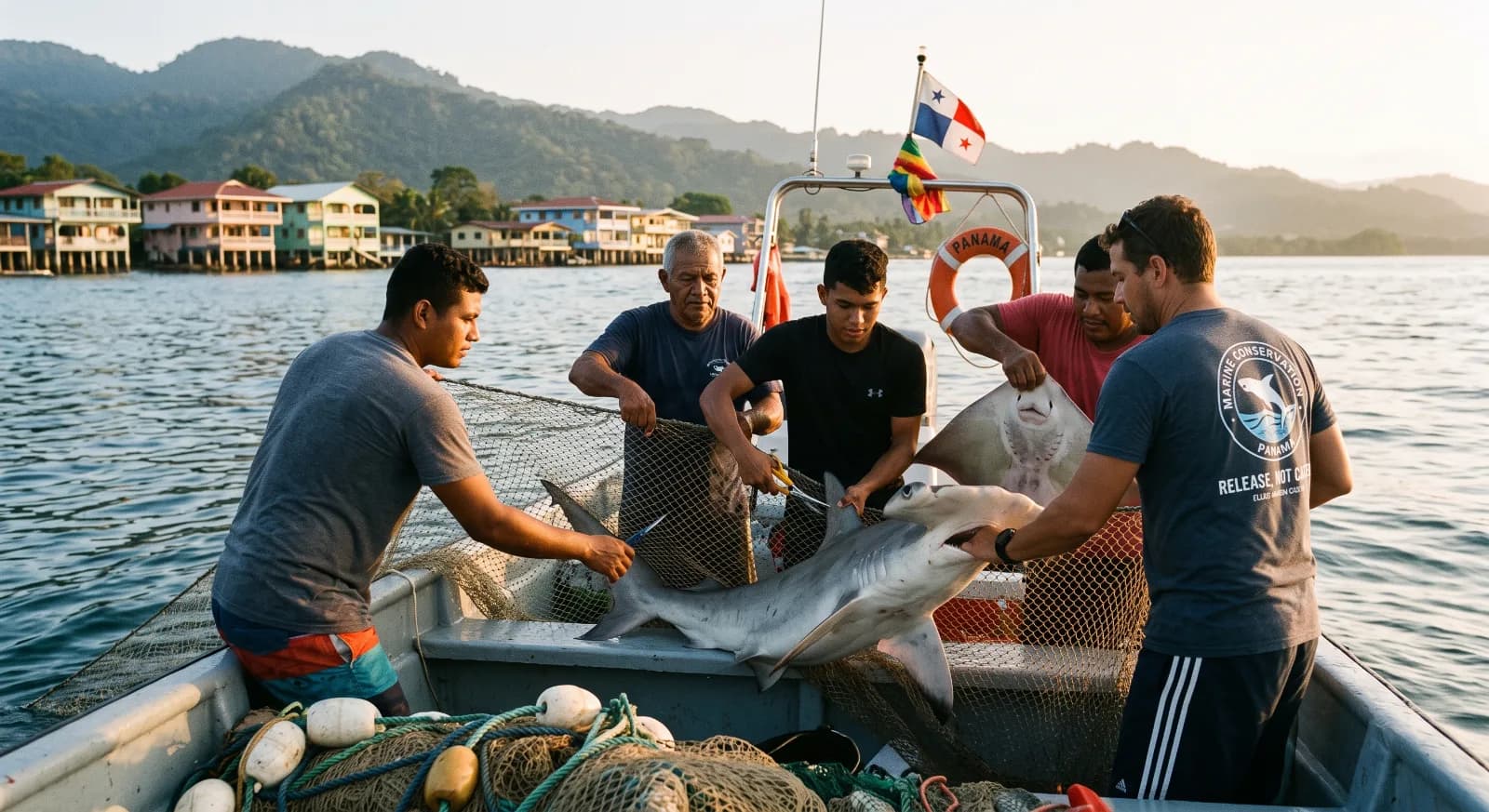
Aboard Panama's industrial fishing vessels, marine biologists are training crews to free sharks and rays that get caught in purse seine nets, part of a broader push by biologists, conservation groups and lawmakers to protect the country's declining shark populations. Marine biologist Yehudi Rodriguez, director of the nonprofit Shark Defenders, has tagged roughly 407 sharks and rays over five years while working aboard the fishing vessel Tabor.
Sharks make up 30% to 60% of bycatch in Panama's artisanal gillnet fisheries, and about 95% of that bycatch is juvenile scalloped hammerhead sharks, according to Rodriguez. "When I started sailing in 1985, we saw sharks very often all around, such as hammerhead sharks in Darien waters. Now it's not so common," said Tabor's captain, Luis Alcides Ortega.
A bill before Panama's legislature would ban targeted shark and ray fishing, prohibit imports of shark and ray products, and cap incidental bycatch retention at 10%. Rodriguez called the 10% cap "unrealistic" and said limits should instead be based on fishing gear, location and season. Panama set a zero-export quota in January 2026 for species listed under the Convention on International Trade in Endangered Species (CITES), but illegal trafficking continues: Hong Kong authorities seized 162 kilograms of dried shark fins from Panama worth an estimated $280,000 in April 2026.
Based on reporting by Monica Pelliccia for Mongabay. Read the original: https://news.mongabay.com/2026/09/panama-looks-to-science-fishers-and-the-law-to-protect-its-sharks-and-rays/
This article was produced with the assistance of AI tools and reviewed by an editor before publication.