Scientists are testing whether an entire Arctic ecosystem can evolve together to survive warming
A $15 million, six-year study on Alaska's tundra is testing whether interconnected species can evolve together fast enough to outrun climate change.
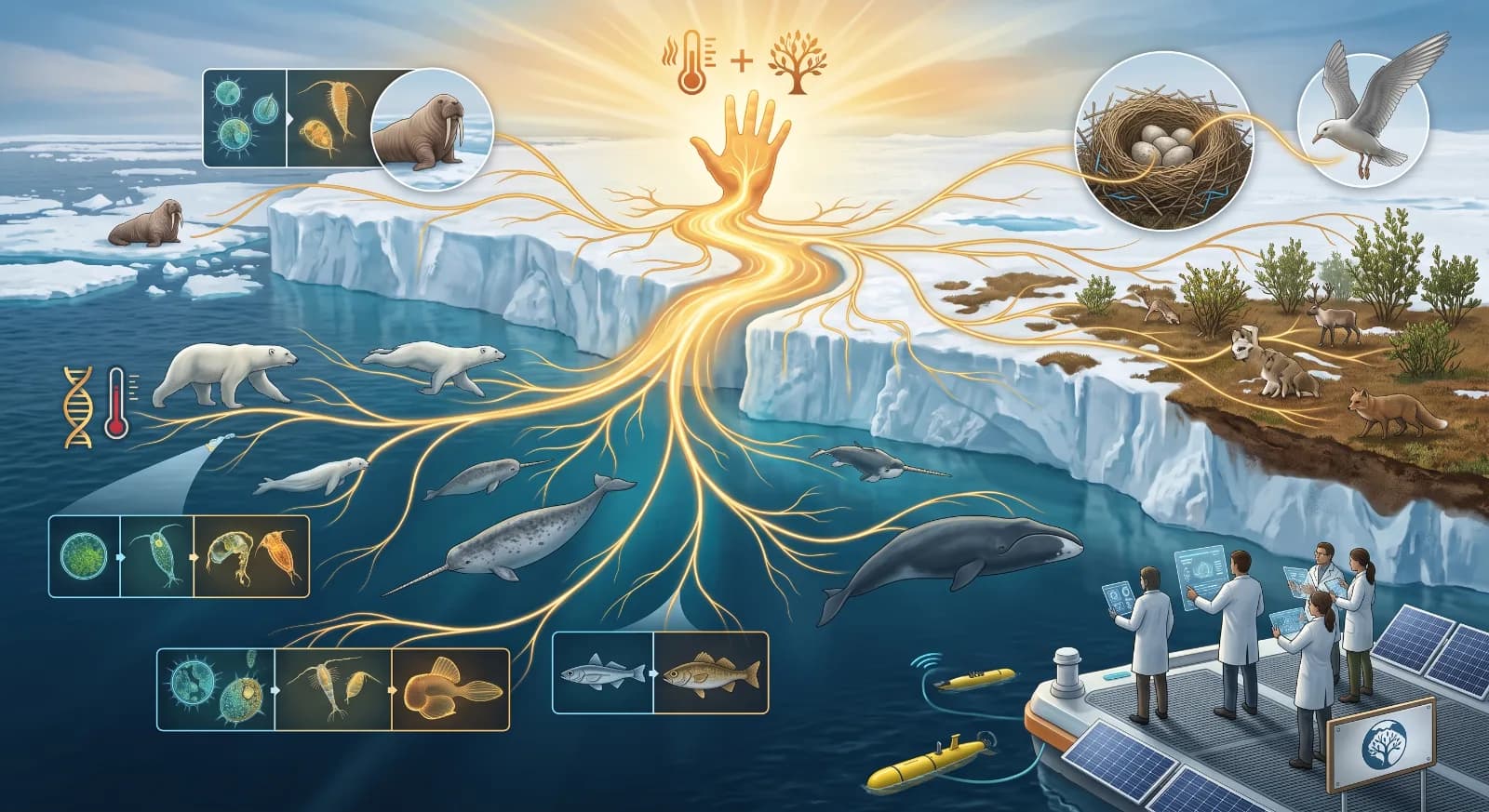
On Alaska's North Slope, a team of 50 scientists has launched a six-year, $15 million project to test whether an entire Arctic ecosystem can evolve together fast enough to survive climate change — rather than each species adapting or dying alone.
The project, called the Evolving Meta-Ecosystems Institute (Evome) and led by Woodwell Climate Research Center's Linda Deegan, is tracking five interconnected species along Alaska's tundra and streams: the white-crowned sparrow, the feltleaf willow, the Arctic grayling, an aquatic mayfly, and a ground beetle. As warming shrubs expand along waterways — a process called "shrubification" — it could disrupt the insects that feed both fish and birds, testing whether their fates are tied together closely enough to adapt in tandem.
Researchers are collecting blood and feather samples from sparrows, mapping genetic diversity across species, and running experiments — including raising Arctic grayling eggs at different water temperatures — to see whether genetic adaptation can keep pace with a warming climate. The Arctic is warming faster than anywhere else on Earth, making its relatively simple ecosystems a useful test case for how ecosystems elsewhere, from alpine regions to the tropics, might hold together under climate stress.
"We think those connections will help them prosper in climate change," Deegan said. "Things won't completely fall apart."
Reporting by Gloria Dickie, The Guardian: https://www.theguardian.com/environment/2026/sep/09/arctic-ecosystem-evolve-adapt-climate-crisis-aoe
This article was produced with the assistance of AI tools and reviewed by an editor before publication.