Swiss farmers adopt 'slow water' techniques to combat extreme weather
To counter the devastating impacts of climate change, including prolonged droughts and torrential downpours, a new agricultural initiative in Switzerland is helping farmers retain water in their soil, secure livestock feed, and reduce reliance on external irrigation.
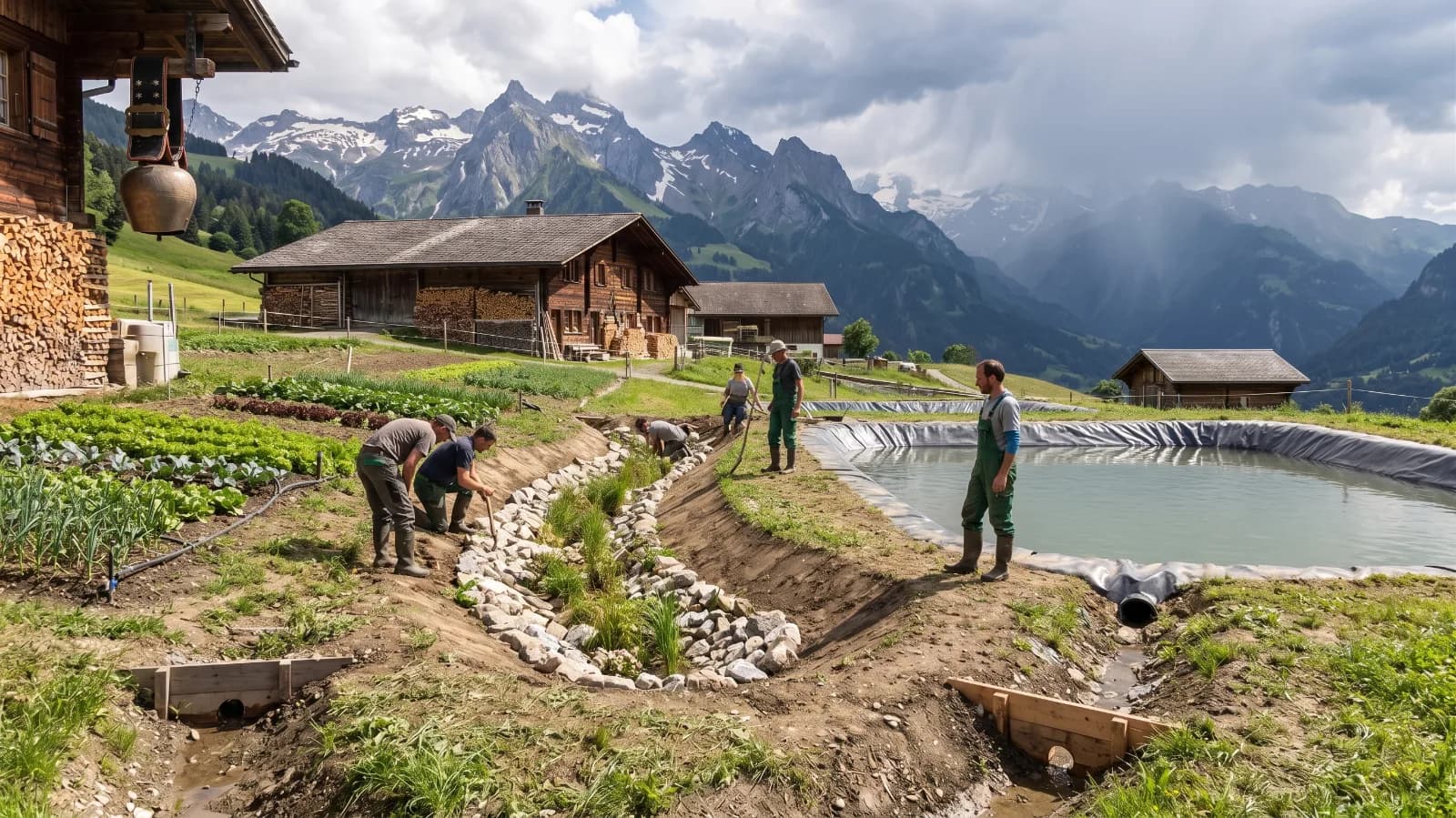
As climate change increasingly causes erratic weather patterns across Switzerland—fluctuating between severe dry spells and sudden heavy rainfall—local agriculture is feeling the strain. According to a recent report by SWI swissinfo.ch, farmers are embracing a paradigm shift to protect their livelihoods through a national initiative known as the "Slow Water" project.
The program, which runs until 2030, aims to mitigate soil erosion, lower flood risks, and dramatically cut external water usage by more than 30 percent in crop production and 20 percent in livestock farming. Oliver Schilling, a hydrology professor at the University of Basel and an expert at the Swiss Federal Institute of Aquatic Science and Technology, explained to swissinfo.ch that the project focuses on keeping water in a given area for as long as possible. This approach marks a stark contrast to historical practices, which primarily focused on draining marshlands to make them suitable for farming.
Urs Burri, a farmer in the Lucerne canton participating in the project, has already witnessed the practical benefits. Speaking to swissinfo.ch, Burri highlighted that the new methods are essential because rainfall has become dangerously uneven, threatening his primary capital: the land. To protect his biodynamic farm, he has constructed artificial ponds and implemented "keylines"—horizontal furrows dug about 40 centimeters deep along contour lines to slow runoff and promote water infiltration. Along these keylines, he has also planted fodder trees that stabilize the soil, provide shade, and offer a mineral source for his cattle.
The Slow Water initiative outlines 15 specific measures that farms can adopt, split between hydrotechnical infrastructure and agricultural adjustments. These include building retention basins and infiltration trenches, alongside less invasive tilling, humus enrichment, and agroforestry systems. While researchers are actively monitoring the long-term impact of these interventions through soil and rainfall sensors, early localized results are promising. By catching and slowing down rainwater, participants hope to ensure their land remains resilient enough to sustain food production during increasingly harsh summer droughts.